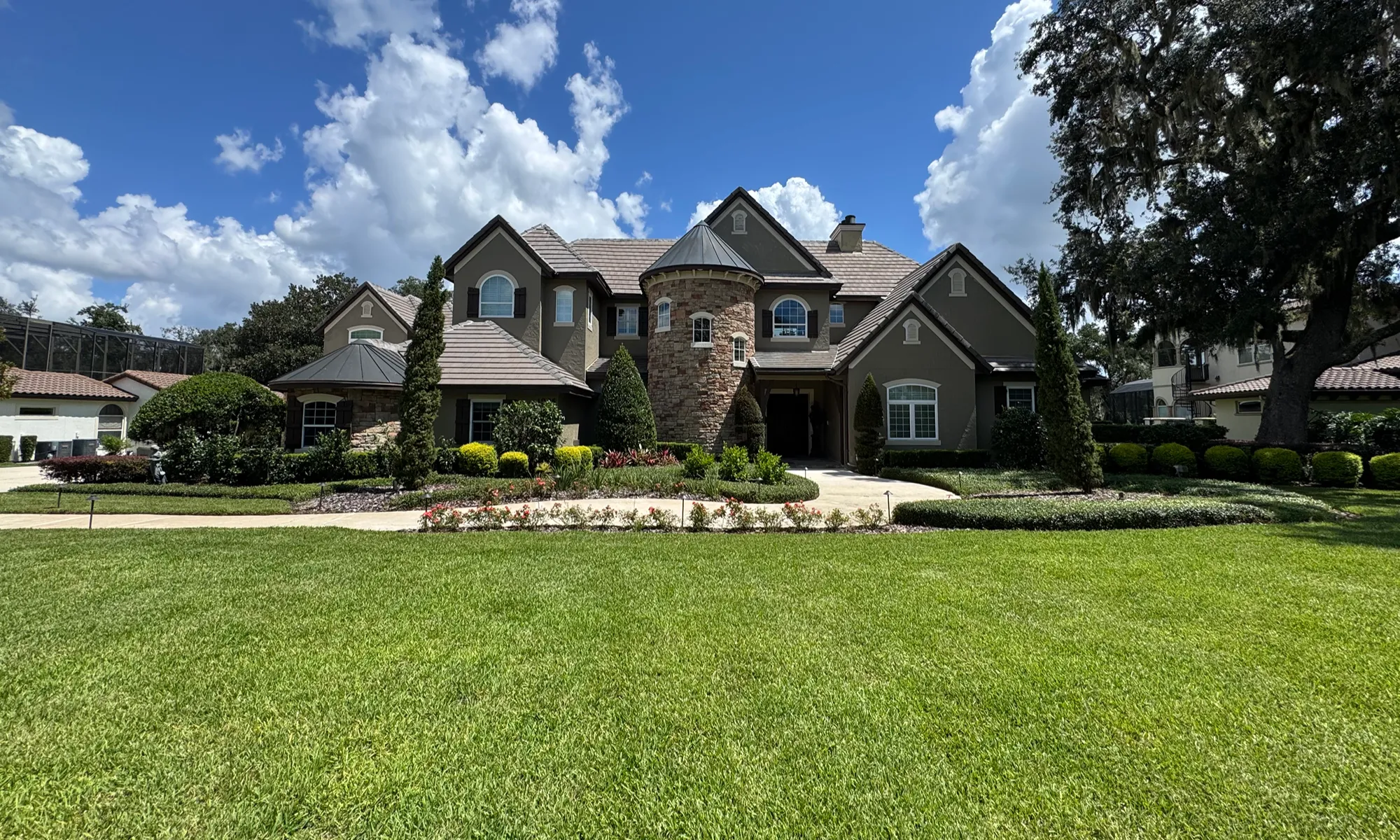
Pooling water, eroding planting beds, and soggy lawn patches that take days to dry out after rain are all symptoms of the same underlying problem: the ground around your home is not directing water away from the foundation the way it should. Before Orlando's rainy season turns that problem into a larger one, Citrus Landscape Solutions can evaluate your site and tell you what the grading picture actually looks like. Call (407) 759-1260 or book a site evaluation online while there is still time to correct the grade before the summer rains arrive.
Most Orlando homeowners dealing with drainage issues in the yard think of the problem as a yard problem. It often is, but it does not stay one. Water that pools next to a foundation or flows toward the house rather than away from it creates hydrostatic pressure against the foundation walls, accelerates the deterioration of the concrete and any waterproofing applied to it, and eventually finds pathways into the structure. In Central Florida's sandy soils, that process happens faster than it does in regions with denser soil, because water moves through sandy ground quickly and in significant volumes during heavy rain events. Grading is the factor that determines which direction that water goes, and the difference between a slope of two percent toward the house and two percent away from it is the difference between a dry foundation and a moisture problem that gets more expensive every season it goes unaddressed.
How Does Slope Direct Water Away From the Foundation?
The principle behind proper grading is straightforward: the ground immediately around the house needs to slope away from the foundation in every direction to direct surface runoff away from the structure rather than toward it. The standard guidance for residential grading calls for a minimum slope of six inches of fall over the first ten feet from the foundation, which works out to a grade of approximately five percent. That slope needs to be maintained consistently around the entire perimeter of the home, not just in the areas that are visually obvious from the street.
In practice, the grading around a home's foundation changes over time in ways that homeowners often do not notice until a symptom appears. Soil settlement, the addition of mulch or fill material in planting beds adjacent to the foundation, the installation of hardscape elements that alter drainage patterns, and erosion from repeated rain events all affect the effective grade around the structure. A planting bed that has been top-dressed with mulch for several seasons may have accumulated enough material to reverse the original positive slope, creating a low point against the foundation that channels water directly to the area that most needs to stay dry.
Proper grading also accounts for how water moves across the full property, not just the immediate foundation zone. Water that drains away from the house needs somewhere to go. A grading plan that directs runoff away from the foundation but into a low point in the middle of the yard creates a pooling problem. The slope needs to be planned as a complete drainage picture that routes water from the foundation perimeter to appropriate drainage outlets, whether that is a swale, a catch basin, a street drain, or a natural grade that carries water off the property.
What Are the Signs That Your Grading Has Gone Wrong?
The most visible signs of negative or inadequate grading are the ones that show up in the yard: standing water after rain that takes more than twenty-four hours to absorb or evaporate, consistently wet soil in the same areas regardless of recent rainfall, erosion patterns that show water moving in a direction that concentrates it against the house rather than dispersing it away, and planting beds where mulch or soil has washed out of the low side and deposited against the foundation.
Inside the house, the signs are more serious. Damp basement or crawlspace walls, efflorescence on concrete block or foundation walls where mineral deposits indicate repeated moisture intrusion, musty odors in spaces adjacent to the foundation, and cracks in foundation walls that correspond with areas of exterior water concentration are all indicators that the exterior grading has allowed water to reach the foundation consistently enough to affect the structure. These are not purely cosmetic concerns. They are evidence of ongoing moisture contact with structural components, and the cost of addressing the structural effects is almost always higher than the cost of correcting the grading that caused them.
We worked with an Orlando homeowner who had been finding moisture in their basement without understanding the source. The foundation was concrete block, and they had assumed the water intrusion was a waterproofing failure or a plumbing leak. When we evaluated the site, the grading around the affected side of the house had developed a negative slope that directed water from both the yard and the roof downspout discharge directly toward the foundation. The homeowner could not believe that a grading problem at the surface was capable of pushing water through a concrete foundation wall, but that is exactly what hydrostatic pressure does when water has nowhere to go but toward and eventually through the path of least resistance. They booked the correction immediately, before Orlando's rainy season arrived and put the already-stressed system under full load.
How Does Grading Pair With Drainage and New Sod?
Grading alone addresses the slope. In some cases, slope correction is all the drainage situation requires. In others, the grading correction needs to be paired with drainage infrastructure that provides a controlled outlet for the water being redirected, particularly when the property layout does not offer a natural grade to carry runoff off the lot. A French drain, a surface swale, or a catch basin connected to a drainage outlet can be designed as part of the grading correction plan, addressing the movement and disposal of water as a coordinated system rather than as separate improvements that may work against each other.
Grading work disturbs the existing lawn surface, which means any corrective grading project that is not paired with a sod restoration plan leaves the homeowner with a bare or patchy yard in the areas that were regraded. Bare soil on a freshly graded slope is also vulnerable to erosion before it is stabilized, which can undo part of the grading correction if a heavy rain event arrives before the surface is covered. Planning the sod installation as part of the grading project, rather than as a separate follow-up, stabilizes the corrected grade immediately and produces a finished result that looks right as well as draining right.
The soil preparation under new sod also benefits from the grading work that precedes it. A regraded surface that has been properly compacted and finished provides the even, stable base that sod needs to establish root contact quickly. Sod installed on an improperly graded or poorly prepared surface develops unevenly, and the drainage problems that existed under the old lawn surface reappear under the new one. Getting the grade right first means the sod installation is working with the corrected site rather than covering a problem that has not been resolved.
Why Does DIY Regrading Usually Fall Short?
Homeowners attempting to correct drainage problems by adding fill soil around the foundation or redistributing existing soil with a shovel and a level are addressing the symptom rather than the cause, and they are doing it without the equipment or the survey data needed to achieve a grade that actually holds up. Topsoil added around the foundation without proper compaction settles unevenly over the following months, often recreating the negative grade it was intended to correct. Fill placed without accounting for the full drainage pattern on the property may solve the pooling in one area while redirecting water to a new low point that was not a problem before.
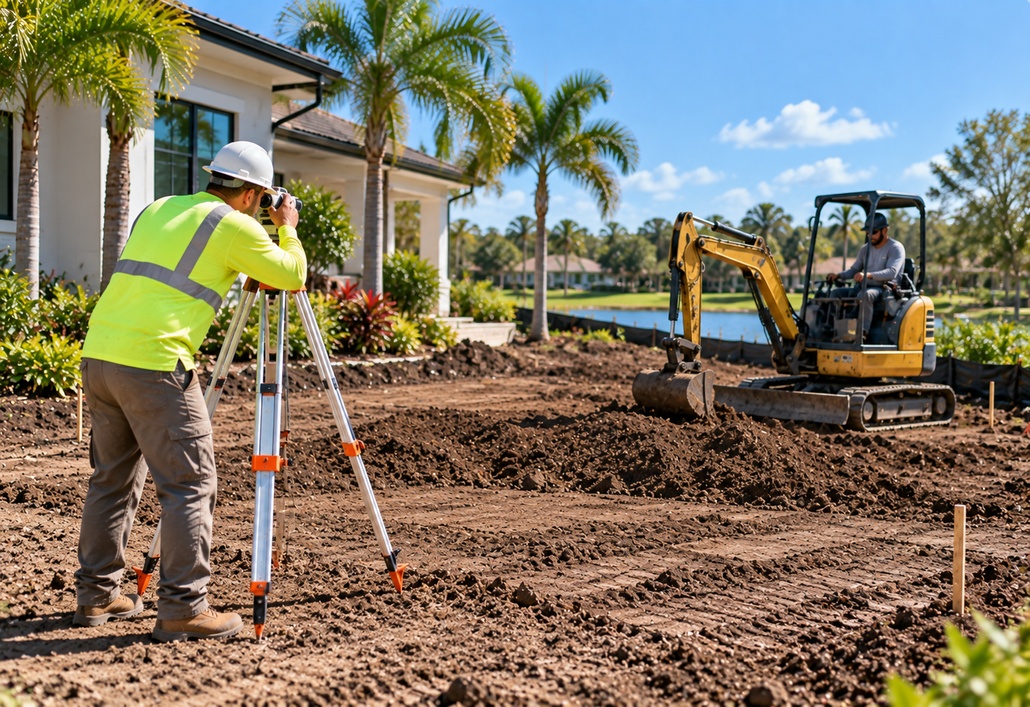
Professional grading uses laser-leveling equipment that measures existing elevations accurately across the full site and calculates the cut and fill required to achieve the target grade at every point. That precision is not achievable with a level and a garden rake. The difference shows in the result: a professionally graded site drains consistently in the intended direction and maintains that drainage pattern over time because the grade was established correctly and the soil was compacted appropriately. A DIY regrading project that felt successful initially tends to reveal its shortcomings during the first heavy rain season.
If your Orlando yard is showing drainage problems and you want a clear assessment of whether grading is the cause, call Citrus Landscape Solutions at (407) 759-1260 or book your site evaluation online. Our grading and leveling service addresses the grade, the drainage plan, and the coordination with sod design and installation so the corrected yard holds up through every rainy season ahead.