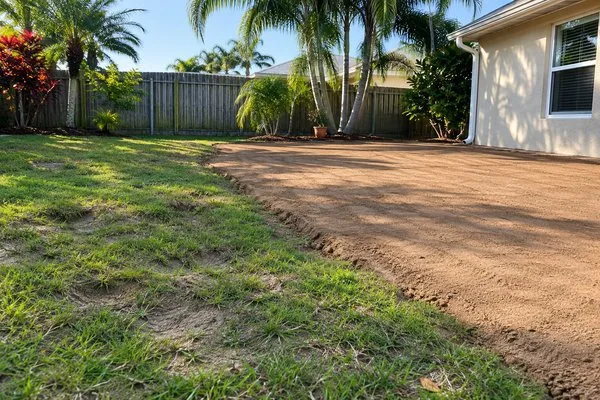
Topdressing may work for some smaller jobs, but major low spots need a closer look because grade changes and drainage need to be taken into account. A thin layer of soil can smooth minor dips. Deep low spots, ruts, and a yard that holds water need land leveling that reshapes the ground itself.
At Citrus Landscape Solutions, we grade and level yards for Melbourne homeowners. Reach out to our team or call (407) 759-1260 to request an on-site assessment.
Why Does Topdressing Often Fail on a Bumpy Lawn?
Because it covers the problem instead of fixing it. Spreading soil fills in low spots for a while, but it does not change the shape of the ground underneath.
A light dusting of soil worked into the grass can help with shallow dips. Trouble starts when the dips are deep. A thick layer of soil dumped into a low spot can smother the grass beneath it, leaving a bare patch that has to regrow or be replaced.
Bagged topsoil also behaves differently than the sandy ground common across Brevard County. Rain can wash it out, and loose fill settles as it dries. Within a season, many of those patched spots sink back down, often unevenly.
High spots are the other half of the problem, and topdressing does nothing for them. Raking soil around a hump in a West Melbourne backyard just makes the hump wider.
We have seen what happens when do-it-yourself grading goes wrong. On one job, an earlier attempt had graded the yard incorrectly, which caused water intrusion that required regrading and a French drain to fix. A small mistake in slope can send water the wrong way.
How Does Professional Land Leveling Reshape the Ground?
It starts with measurements, not guesses. Professional land leveling removes the bumps, fills the low spots with compacted soil, and sets a slope that moves water away from the house.
Before any dirt is moved, we assess your property using transit and laser levels. Then we use skid steers and loaders to scrape away dead grass, invasive roots, and debris. When the existing dirt cannot create enough slope, we bring in clean fill to raise the elevation.
The final grade creates a positive pitch, so roof runoff and heavy rain flow away from your foundation. Where water still needs help, swales, French drains, and drainage channels can carry it off. The surface is then smoothed and compacted, ready for what comes next.
Water management matters even more here. Properties along the Indian River Lagoon often deal with high water tables, and stormwater runoff affects lagoon health. A properly graded yard handles rain better and can work with features like rain gardens. Learn more about our grading and leveling process.
Why Does a Level Base Matter Before New Sod, Turf, or Pavers?
Whatever goes on top follows the shape underneath. Laying sod over bumpy ground creates a lumpy lawn, and building a patio on uneven dirt leads to cracking and settling.
New sod is a big investment. If it goes down over ruts and dips, those flaws show through as soon as it roots in. You end up with the same lumpy yard, just greener. Artificial turf has the same problem, since the base shapes how it looks and drains.
Pavers need an even, compacted base too. Soft spots under a patio or walkway turn into sunken pavers and trip hazards over time.
For a newer home in Viera, where the yard may have settled since construction, leveling before new sod or a patio protects the money you are about to spend.
Our Melbourne hardscape and sod project shows fresh sod in the front and back yards plus a paver fire pit with a matching paver seating area. Projects like that only look right when the ground beneath them is right.
What Hazards Does an Uneven Yard Create?
Lumps, ruts, and low spots catch feet and mower wheels. An uneven yard is harder to walk, harder to mow, and harder to keep healthy.
Holes and ruts are easy to miss in thick grass. Kids running across the yard, older relatives walking to the patio, and anyone carrying something heavy can roll an ankle in a dip they never saw.
Mowing gets harder too. On high spots, the blade scalps the grass down to the dirt, leaving brown patches. In low spots, wheels drop and the cut gets uneven. The mower bounces, and the yard never looks finished.
Low spots that hold water add soggy ground and weak grass after heavy rain. Leveling fixes all of these at once. See our Melbourne landscaping page for more of our work in the area, then call (407) 759-1260 or contact us to schedule a site visit and quote.