
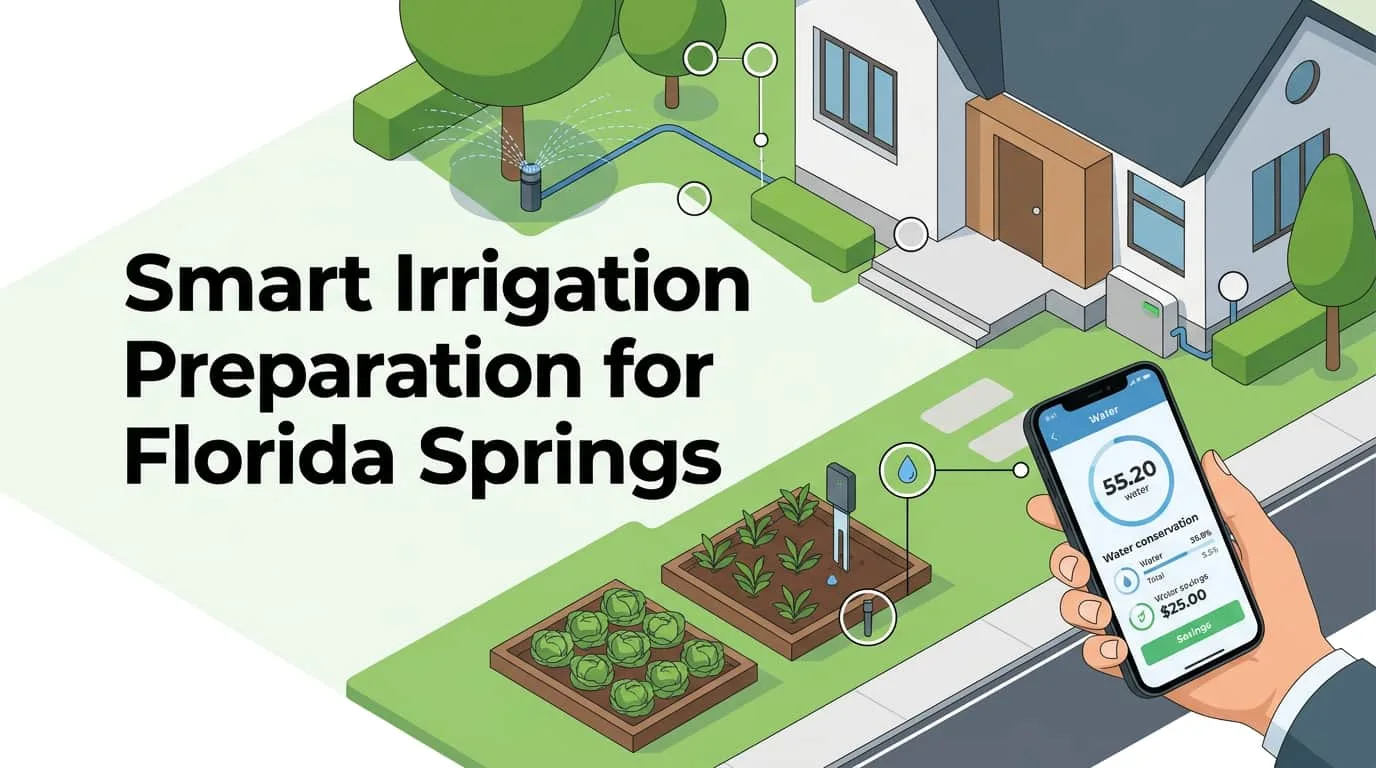
Spring arrives fast in Sarasota. Before your St. Armands Circle neighbors notice your lawn struggling in the April heat, now is the time to check your irrigation system, update your schedule, and make sure every sprinkler head is doing its job. A little preparation in late February or March can save you hundreds of dollars in water bills and dead sod replacement costs.
Ready to get your lawn spring-ready? Contact Citrus Landscape Solutions at (407) 759-1260 for a free irrigation consultation before the heat sets in.
Why Does Early Irrigation Prep Matter in Florida?
Skipping your pre-season irrigation check means your turf enters Florida's intense spring heat without proper hydration support. Sarasota's sandy soils dry out fast. Once drought stress sets in, warm-season grasses like St. Augustine and Zoysia can brown out within 7 to 10 days during a dry spell, and recovery often requires professional sod design and installation that runs $0.35 to $0.85 per square foot. Catching problems early keeps your lawn healthy and your wallet intact.
Florida's spring season also brings unpredictable rainfall. March and April average only 2 to 3 inches of rain across the Sarasota region, well below what your lawn needs. That gap between rainfall and turf demand is where a properly calibrated irrigation system earns its keep.
How Do Smart Controllers and Rain Sensors Save Water in Sarasota?
Smart irrigation controllers can reduce outdoor water use by 30 to 50 percent compared to standard timer-based systems. They adjust watering schedules automatically based on weather data, evapotranspiration rates, and soil moisture levels.
That matters a lot in Sarasota County, where the Southwest Florida Water Management District (SWFWMD) enforces year-round watering restrictions. Most residential properties are limited to two days per week. Watering outside your assigned schedule can result in fines starting at $164 for a first offense. A smart controller takes the guesswork out of staying compliant while keeping your turf properly watered.
Rain sensors are equally valuable. Florida law actually requires functioning rain sensors on all automatic irrigation systems. If yours has been disconnected or is no longer working, replace it before the season ramps up. Replacement sensors typically cost $15 to $40 at local hardware stores and take about 30 minutes to install.
Step-by-Step: How to Inspect Your Irrigation System After Winter Dormancy
Most Sarasota lawns experience a semi-dormant period from December through February. During that time, irrigation runs less frequently and problems go unnoticed. Here's how to do a thorough check before spring watering picks up.
Step 1: Turn the system on manually. Run each zone for 2 to 3 minutes and walk the entire yard. Watch for heads that aren't popping up, streams that spray sideways, or puddles forming around the base of a head.
Step 2: Check for broken or clogged heads. Broken heads waste water and create soggy spots. Clogged nozzles leave dry patches. Replacement heads run $3 to $15 each depending on type.
Step 3: Inspect for underground leaks. Soft ground near irrigation lines when the system isn't running often signals a subsurface leak. These can go undetected for weeks and spike your water bill significantly.
Step 4: Verify head spacing and coverage. Each head should deliver head-to-head coverage, meaning the spray from one head reaches the next. Gaps in coverage show up as brown strips within 2 to 3 weeks of consistent spring heat.
Step 5: Test the backflow preventer. Sarasota County requires a functioning backflow preventer on all irrigation systems connected to a potable water supply. If yours hasn't been tested in over a year, schedule a licensed inspection.
Our team at Citrus Landscape Solutions typically finds at least one broken head and one coverage gap on properties that haven't had a system inspection since the prior spring. Most irrigation tune-ups take 1 to 2 hours and cost $75 to $150 for a standard residential property.
Does Soil Type Affect How Often You Should Water in Sarasota?
Yes, significantly. Sandy soils, which cover most of coastal Sarasota including neighborhoods near Siesta Key and the Ringling Museum area, drain quickly and need more frequent but shorter watering cycles. A typical schedule for sandy soil during spring is 2 days per week, 20 to 25 minutes per zone.
Clay-heavy soils, more common in inland areas east of I-75, hold moisture longer. Overwatering clay soil leads to root rot and fungal disease. For clay-dominant areas, reduce run times to 10 to 15 minutes per zone and allow more time between cycles.
Mixing up these schedules for the wrong soil type is one of the most common irrigation mistakes we see. If you're not sure what soil type you have, a basic soil probe test costs around $20 at a local nursery. The results tell you exactly how deep water is penetrating and whether your run times need adjusting.
What Do Local Water Management Guidelines Say About Irrigation?
The SWFWMD sets and enforces irrigation rules for Sarasota County homeowners. Following them isn't just about avoiding fines. It protects the local water supply that feeds communities from Osprey to North Port.
Key guidelines to follow this spring:
- Watering days: Odd addresses water on Thursday and Sunday; even addresses water on Wednesday and Saturday
- Watering times: Irrigation must occur before 8 a.m. or after 6 p.m. to reduce evaporation
- New sod exemption: Newly installed sod can be watered daily for the first 30 days, with proper notification to your water utility
- Micro-irrigation: Systems using drip or micro-spray heads may qualify for a different schedule, allowing more flexible run times
Keeping your system calibrated to these rules also helps your turf. Watering in the early morning means less moisture sits on leaf blades overnight, which reduces the risk of gray leaf spot and brown patch fungus common in Sarasota's warm spring conditions.
Does Smart Irrigation Improve Curb Appeal and Long-Term Turf Health?
A well-maintained irrigation system directly affects how your lawn looks from the street. Consistent, even watering produces uniform turf color and density. Uneven coverage creates patchy growth and thin areas that weeds exploit quickly.
Over a full growing season, homes with properly functioning smart irrigation systems maintain thicker, greener turf with 20 to 30 percent less water than those using outdated timer systems. That consistent lawn health also sets the stage for other outdoor improvements. If you're thinking about a new patio or walkway, healthy surrounding turf makes the finished project look that much better. Our hardscaping services pair well with an upgraded irrigation setup, since we can make sure your sprinkler coverage accounts for any new paved areas.
From a long-term value standpoint, properties with documented irrigation maintenance histories and verified water efficiency upgrades tend to sell faster in the Sarasota market. Buyers recognize the cost savings, and a healthy lawn makes a strong first impression.
Get Your Sarasota Lawn Ready for Spring
Spring heat in Sarasota doesn't give you much warning. Daytime highs climb into the upper 80s by mid-April, and if your irrigation system has a problem you haven't caught yet, you'll see it in your lawn before you see it in your water bill.
Check your system now. Update your schedule for SWFWMD compliance. And if you'd rather have a professional handle the inspection, adjustment, and seasonal setup, Citrus Landscape Solutions is ready to help. Call us at (407) 759-1260 to schedule your spring irrigation check before the season's busy period fills up our calendar.