More Orlando homeowners are redesigning their outdoor spaces with their dogs and cats in mind—and for good reason. Florida's intense heat, toxic plants, and sandy soil create real hazards for curious pets. If you want a yard that's beautiful and safe for your four-legged family members, this guide walks you through exactly how to do it.
Ready to get started? Call Citrus Landscape Solutions at (407) 759-1260 for a free consultation on building your pet-friendly outdoor space.
What Is Barkitecture—and Why Are Orlando Homeowners Embracing It?
Barkitecture is the practice of designing yards and outdoor spaces specifically with pets in mind—and it's taken off across Central Florida neighborhoods like Audubon Park and Baldwin Park, where homeowners are transforming standard backyards into pet-friendly retreats. This shift isn't just about aesthetics. Florida's climate creates unique challenges: scorching pavement, flooding rain, and native plants that can be toxic to animals. A thoughtfully designed pet-safe yard addresses all of these while still looking great.
The trend has gained serious momentum. Across the U.S., pet owners spend an average of $1,500–$5,000 on pet-friendly yard upgrades, and that figure continues to climb as more families treat outdoor safety as a non-negotiable.
How Do You Identify Florida-Specific Yard Hazards?
Start by walking your yard the way your pet would. Get low. Look at what they can reach, smell, and chew. Florida yards carry a specific set of risks that don't exist in cooler climates:
- Toxic plants like sago palm, lantana, and yesterday-today-and-tomorrow are common in Central Florida landscaping and are highly dangerous to dogs and cats
- Standing water left by Florida's summer downpours can breed bacteria and mosquitoes
- Unshaded hardscape heats up fast—concrete can reach 130°F or more on a summer afternoon near Lake Eola Park
- Sandy, shifting soil near fences creates escape routes that determined dogs will find
Walk the perimeter of your fence line looking for gaps at the base. Check your plant beds against a pet-safe plant list. These small steps take 30 minutes and can prevent an emergency vet visit.
What Makes a Pet-Safe Orlando Landscape?
A well-designed pet-safe yard balances three things: shade, surface safety, and separation. Here's what that looks like in practice:
Shaded Retreats
Orlando receives an average of 233 sunny days per year. Shade structures aren't optional—they're essential. Dense canopy trees like Southern live oak or Crepe myrtle can reduce surface temperatures by up to 20°F underneath them. Pergolas with climbing non-toxic vines like Confederate jasmine offer another option, combining beauty with function.
Durable, Pet-Friendly Turf
Standard Bermuda or St. Augustine grass holds up reasonably well under paw traffic, but high-use play areas tend to develop bare, muddy patches within a few months. Two popular solutions for Central Florida homeowners are:
- Sod installation with Zoysia or Floratam St. Augustine, which are more wear-resistant and softer underfoot
- Artificial turf, which eliminates mud, bare patches, and pesticide exposure entirely—a particularly smart option for dogs that dig
Artificial turf installations typically run between $8–$15 per square foot installed, and quality products are UV-resistant and designed to handle heavy pet traffic without fading or flattening.
Which Florida Plants Are Safe for Pets?
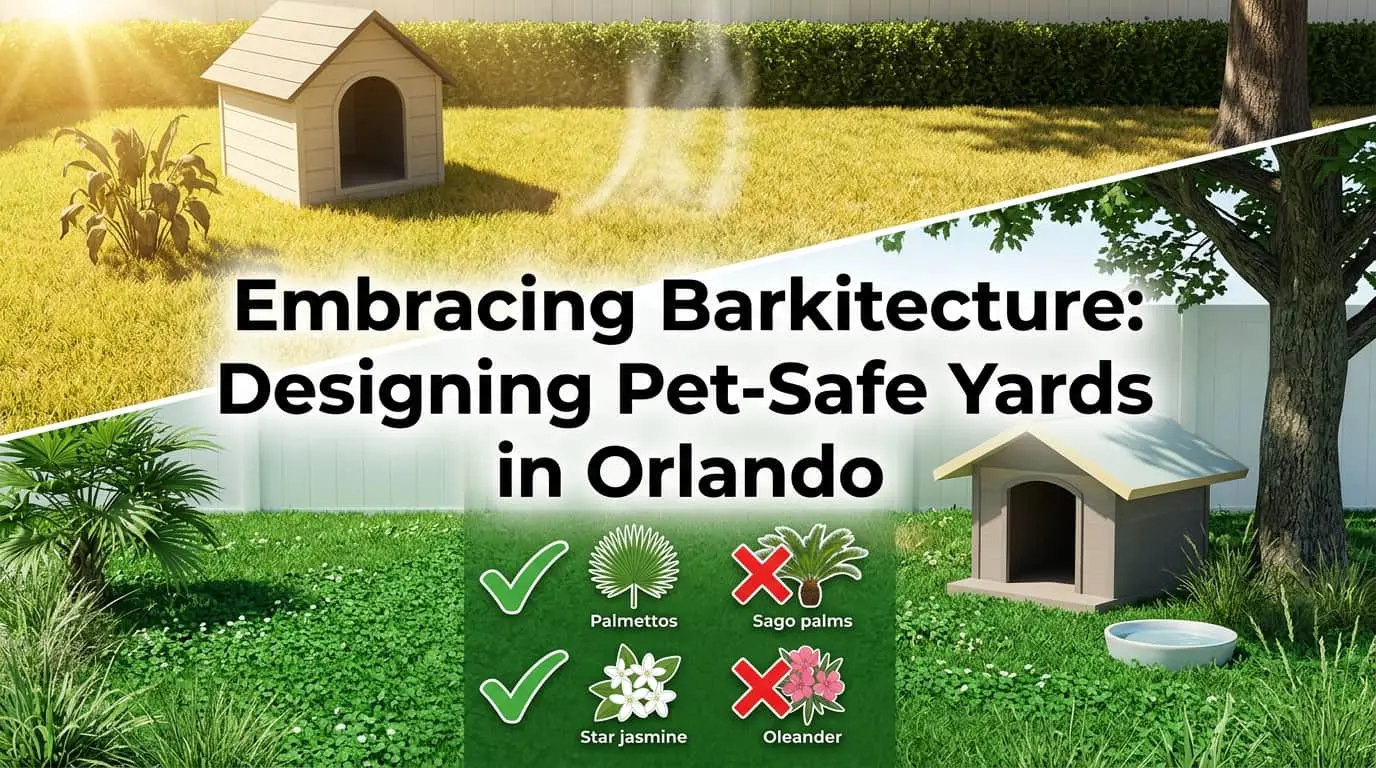
Choosing the right plants is one of the most consequential decisions in a pet-safe yard. Many tropical plants that thrive in Orlando's climate are unfortunately toxic to cats and dogs. The good news is there are plenty of beautiful, non-toxic alternatives.
Pet-safe options for Central Florida yards:
- Blue Daze (Evolvulus glomeratus) — low-growing, drought-tolerant, and produces cheerful blue flowers
- Pentas — a Florida favorite that attracts butterflies and is non-toxic to pets
- Catnip and lemongrass — both safe, both functional, and easy to maintain
- Marigolds — bright, low-maintenance, and useful as a natural insect deterrent
- Dwarf Walter's viburnum — a native shrub that works well as a border plant
Plants to remove from a pet-accessible yard:
- Sago palm (highly toxic; can cause liver failure)
- Lantana (toxic berries)
- Oleander (toxic to pets and humans)
- Aloe vera (mildly toxic to dogs)
If you're planning a broader landscape refresh, professionals who specialize in landscape design St. Petersburg Florida and Central Florida planting plans can source pet-safe species that also suit Florida's climate and drainage conditions.
How Do You Keep Paws Cool on Hot Florida Pavement?
This is one of the most overlooked risks in pet yard design. If you can't hold the back of your hand against a paved surface for five seconds, it's too hot for your dog to walk on. On a typical Orlando summer day, that means dark pavers or asphalt can reach dangerous temperatures by 10 a.m.
Smarter paving options include:
- Light-colored concrete or pavers — lighter surfaces absorb significantly less heat than dark alternatives
- Decomposed granite or gravel paths — affordable (typically $1–$3 per square foot) and much cooler underfoot
- Artificial turf pathways — modern pet-grade turf includes cooling infill materials designed to reduce surface heat
- Stepping stones through planted areas — reduces the total area of hard surface your pet walks on
Strategically placing trees or pergolas over walking paths can also drop surface temperatures meaningfully and makes the space more comfortable for the whole family.
What Are the Best Cooling Water Features for Orlando Pets?
Hydration matters enormously for dogs during Florida summers, especially between June and September when heat indices regularly push past 100°F. A dedicated hydration station in your yard—whether a simple pet-safe fountain or a shallow splash pad—can make a real difference.
Options range widely in cost and complexity:
- Automatic pet water fountains — outdoor-rated units start around $40–$80 and keep water circulating and fresh
- Shallow splash pools — a pre-formed pond liner or small splash area costs $150–$400 and gives dogs a place to cool down quickly
- Misting systems — installed along a fence or pergola, a basic misting setup runs approximately $200–$500 and reduces air temperature by 10–15°F in the immediate area
Avoid deep water features without gradual slopes for easy entry and exit, especially for older or smaller dogs.
What Fencing Works Best for Keeping Pets Safely in the Yard?
A secure fence is the foundation of every pet-safe yard. That said, "secure" doesn't have to mean industrial. There are attractive fencing solutions that contain even escape-prone dogs while complementing your home's exterior.
Key considerations specific to Central Florida and landscape design St. Petersburg Florida projects:
- Fence height: Most dogs are well-contained by a 5–6 foot fence, but high-energy breeds may need 6 feet minimum
- Underground barriers: If your pet digs, bury hardware cloth or an L-footer 12 inches deep along the fence line to block tunneling attempts
- Material choice: Vinyl and aluminum fences stand up well to Florida's humidity and salt air without rusting or rotting; both look clean and require minimal upkeep
- Sightline reduction: Dogs that can see movement outside the fence are more likely to pace, bark, and attempt escapes. Solid or lattice-topped panels reduce visual stimulation
Fence installation that incorporates pet-safe landscaping along the interior edge—dense, non-toxic shrubs planted a foot inside the fence line—naturally discourages fence-running behavior.
How Do You Maintain a Pet-Safe Orlando Yard Through the Seasons?
Central Florida doesn't have traditional seasons, but it does have a wet season (June–September) and a dry season (October–May), and each brings its own yard maintenance demands.
Wet season (June–September):
- Inspect for standing water weekly—puddles left longer than 48 hours can attract mosquitoes and harbor bacteria
- Check that lawn fertilizers and weed treatments are pet-safe before application; many standard products contain organophosphates that are harmful to dogs
- Rinse artificial turf every 1–2 weeks during heavy-use periods to prevent bacteria buildup
- Trim back fast-growing tropical plants that may be encroaching on pet areas
Dry season (October–May):
- Increase watering frequency for natural grass to prevent dry, cracked patches that irritate paw pads
- Inspect fence posts and base for shifting, which is common in sandy Central Florida soil
- Reapply pet-safe mulch (cedar or pine bark) to garden beds as needed—these biodegrade faster in Florida's humidity
One practical rule: read every product label before applying anything to a yard your pets access. If it requires a re-entry interval before children can play outside, assume the same for your pets.
Your Pet-Friendly Yard Starts Here
Designing a pet-safe yard in Orlando doesn't require compromising on style. The right combination of non-toxic plants, cool surfaces, proper shading, and secure boundaries creates an outdoor space that works for your whole family—two-legged and four-legged alike. Homeowners across Central Florida, from College Park to Winter Park, are making this investment, and the results speak for themselves: happier pets, fewer vet scares, and a yard that genuinely gets used.
Whether you're starting from scratch or updating an existing space, the professionals at Citrus Landscape Solutions bring local expertise in landscape design St. Petersburg Florida and across the greater Orlando area. From pet-grade artificial turf to custom sod design and installation, their team handles every detail with your pets' safety—and your yard's beauty—in mind.
Call Citrus Landscape Solutions today at (407) 759-1260 to schedule your free consultation.