Tampa gets hit hard every summer. Between June and September, some neighborhoods near Hillsborough Bay see over 50 inches of rainfall, and a single afternoon storm can drop 2-3 inches in under an hour. When that water has nowhere to go, it pools on driveways, floods patios, and washes away landscaping you've spent good money on.
That's where permeable hardscapes come in. Ready to stop the flooding and upgrade your outdoor space? Call Citrus Landscape Solutions at (407) 759-1260 for a free consultation today.
What Makes a Hardscape "Permeable"?
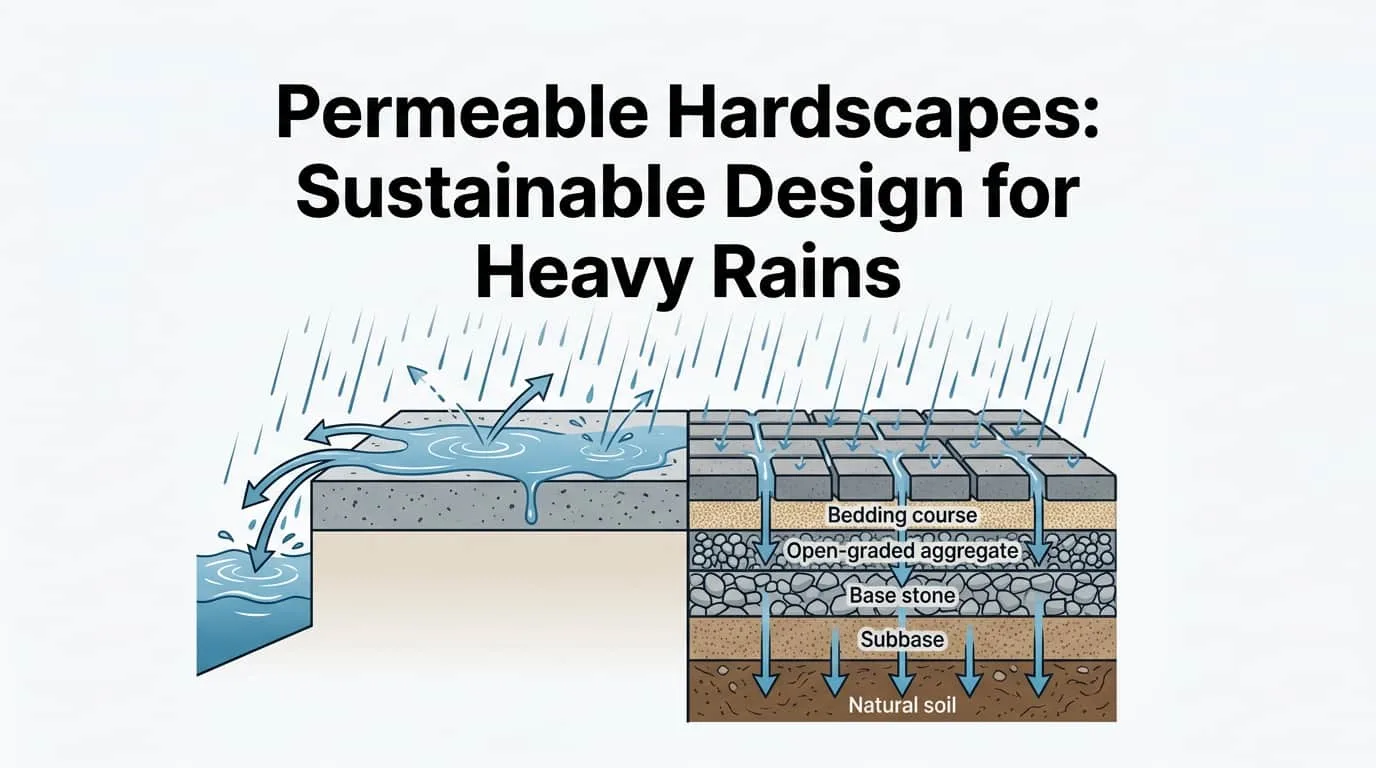
Permeable hardscapes allow rainwater to filter directly through the surface into the ground below, rather than running off into storm drains or pooling in your yard. Instead of a solid concrete slab, you're working with materials like interlocking pavers, gravel, or porous stone, each designed with gaps or open pores that let water pass through at rates of 3-8 gallons per square foot per minute.
The water moves down through a layered sub-base, typically crushed aggregate and sand, where it slows, filters, and gradually recharges the soil. For Tampa homeowners, this matters more than most people realize. Florida's sandy soil is actually well-suited to this process when the sub-base is properly designed, making permeable systems highly effective here compared to clay-heavy regions up north.
Why Does Stormwater Management Matter for Tampa Homeowners?
Poor stormwater management doesn't just mean a soggy yard. It erodes topsoil, damages foundations over time, introduces pollutants into groundwater, and can actually put you at odds with local regulations. Hillsborough County has specific stormwater ordinances, and many HOAs in areas like Westchase and New Tampa have requirements around impervious surface coverage on residential lots.
A properly installed permeable hardscape can reduce surface runoff by up to 80% compared to traditional concrete. That's a significant number for any homeowner dealing with repeat flooding after every afternoon storm.
There's also a financial case to make. Homes with functional, attractive hardscape installations tend to appraise higher, with estimates suggesting quality outdoor improvements return 60-70% of their cost in added property value. A permeable paver patio or driveway that also solves a drainage problem? That's a double win.
What Are the Best Materials for Florida's Heat and Humidity?
The best permeable materials for Tampa's climate are concrete interlocking pavers, open-graded crushed granite, and natural flagstone with open-joint fills. Each holds up differently under Florida's conditions.
Concrete interlocking pavers are the most popular choice for driveways and patios. They handle Tampa's 90-plus degree summers without cracking, resist UV fading better than poured concrete, and individual units can be pulled up and replaced if needed. Expect to pay $12-$20 per square foot installed, depending on pattern complexity and sub-base depth.
Crushed granite and gravel work well for garden paths, side yards, and areas with lighter foot traffic. They're the most affordable option at $3-$7 per square foot, drain extremely well, and stay cool underfoot. Maintenance involves occasional raking and top-up fills every 2-3 years.
Natural flagstone with open joints filled with decomposed granite or ground cover plants offers the best aesthetic, especially for backyard entertaining areas. Costs run $15-$30 per square foot installed. The open joints allow strong drainage while the stone itself stays stable through tropical storm conditions.
For some areas, particularly side yards or low-traffic zones, homeowners combine these materials with artificial turf Tampa Florida installations. The turf provides a clean, green look with drainage rates comparable to permeable pavers, making it a practical complement to a full permeable hardscape design.
How Does Florida's Sandy Soil Change the Installation Process?
Sandy soil in Tampa actually drains faster than soil types found further north, but that creates its own challenge: sub-base stability. Without the right foundation layers, pavers can shift, sink, or become uneven within the first rainy season.
Our team at Citrus Landscape Solutions typically installs a minimum 6-inch layer of open-graded aggregate (ASTM #57 stone) beneath permeable pavers in Tampa projects. In areas with especially loose or fine sand, we go deeper, sometimes 8-10 inches, to prevent settling. This compacted aggregate layer is what keeps the surface stable while still allowing water to move through freely.
On top of that aggregate base goes a 1-inch layer of bedding stone, and then the pavers themselves. For areas prone to heavy flow, like driveway aprons near the street or patio sections directly below roof lines, we add perforated drain pipes within the sub-base to handle overflow during peak storm events.
One thing most homeowners don't realize: edge restraints are non-negotiable in Florida installs. Without solid plastic or metal edging, Tampa's sandy soil won't hold the border of your paver field, and you'll see spreading within a year. Get the edging right, and your permeable surface should stay structurally sound for 20-25 years with basic maintenance.
What Maintenance Does a Permeable Hardscape Need in Tampa?
Permeable surfaces need less maintenance than traditional concrete, but they do need some. The biggest threat to permeability over time is sediment clogging the joints and pores. In Tampa, where afternoon storms kick up sand and organic debris, plan to inspect your surface twice a year, once in May before peak storm season and again in November after it ends.
For interlocking pavers, a pressure wash with a wide fan tip (not a concentrated stream) clears sediment from joints without displacing the bedding material. Do this every 12-18 months. If joints have silted up significantly, vacuuming with a commercial landscape vacuum and refilling with clean aggregate restores permeability quickly.
Gravel and crushed granite areas benefit from occasional raking and a fresh top-up of material, usually 1-2 inches, every 2-3 years. Cost for this kind of routine top-up typically runs $150-$300 for an average-sized path or side yard.
Artificial turf Tampa Florida installations that sit alongside permeable pavers also need occasional brushing and a rinse-down after heavy storms, but their sub-base drainage layers are designed to handle Tampa rainfall without any special intervention.
What About Pairing Permeable Hardscapes with Landscape Design?
Permeable hardscapes work best as part of a complete outdoor plan. On their own, they manage the water. Paired with the right plant material and grading, they can redirect and slow runoff across your whole property.
Native plants and thoughtful planting design play a direct role in stormwater management. Deep-rooted Florida natives like beautyberry, firebush, and muhly grass absorb water quickly and stabilize the soil around hardscape edges. In neighborhoods like South Tampa and Palma Ceia, where lots are smaller and impervious surface coverage limits are tighter, combining permeable pavers with strategic planting often makes the difference between a yard that handles storms well and one that floods after every heavy rain.
Where artificial turf Tampa Florida fits into this picture is along fence lines, in side yards, and in shaded areas where grass won't thrive. Because quality synthetic turf is installed over a permeable backing and drainage layer, it doesn't add impervious surface in the way that concrete does.
Ready to Stop the Flooding and Upgrade Your Outdoor Space?
Permeable hardscapes are one of the smartest investments a Tampa homeowner can make. They handle Florida's rainfall, protect your water table, keep you compliant with local codes, and look great while doing it.
Citrus Landscape Solutions has completed 500+ projects across Central Florida, and our team understands what Tampa's soil, storms, and HOAs demand. Whether you're planning a full driveway replacement, a backyard patio, or a combination system with artificial turf and pavers, call us at (407) 759-1260 for a free quote. We'll walk your property, review your drainage situation, and put together a plan built for where you actually live.