If you have overwatered beds in some areas and bone-dry patches in other areas, it may be time to rethink your irrigation set-up. When new heads keep failing to fix the same spots, the layout is usually the real problem. Many irrigation systems were designed for a yard that no longer exists.
At Citrus Landscape Solutions, we evaluate and redesign irrigation for St. Petersburg homeowners. Reach out to our team or call (407) 759-1260 to book an evaluation.
What Signs Point to a Layout Problem, Not a Broken Head?
If the same areas stay dry or soggy after repairs, look at how the system is zoned. A broken head causes one bad spot. A layout problem causes a pattern.
The biggest clue is a zone that waters lawn and shrub beds together. Turf and established shrubs need very different amounts of water. When they share a zone, one is always getting too much or too little. You end up with mushy beds and yellowing grass on the same schedule.
Watch where problems repeat. Dry patches in the same corner every summer, soggy soil beside the house after every watering day, and a monthly repair bill that never seems to end all point to design rather than parts.
Older systems are common in established neighborhoods like the Old Northeast. Yards there have often been replanted, expanded, or hardscaped over the years while the irrigation stayed the same. Swapping heads one at a time will not fix a system that no longer matches what is growing above it.
How Do Grown-In Plants and Overspray Throw Off Coverage?
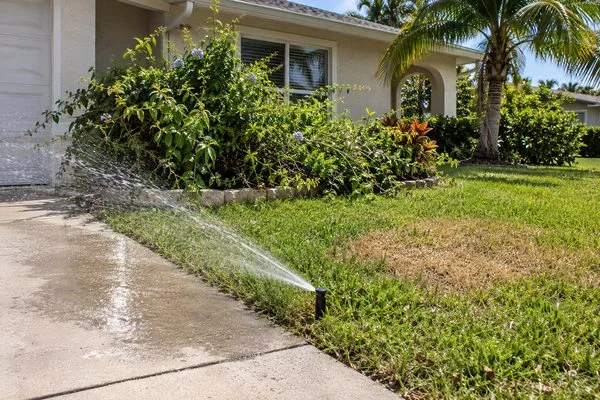
Plants grow over heads and block the spray, and poorly aimed heads water the driveway instead of the lawn. Both leave gaps where water should land and waste where it should not.
A head that worked fine when the hedge was knee-high gets swallowed once the shrubs fill in. The spray hits leaves and stops short, and the turf beyond it dries out. You might replace that head twice before realizing the real issue is what is growing around it.
Overspray is the opposite problem. Water landing on driveways, sidewalks, and walls is water your plants never get. Traditional spray heads also lose water to evaporation and wind drift.
That waste carries an extra cost in St. Petersburg. Pinellas County's reclaimed water system contains elevated salt levels, and salt exposure can burn leaves and corrode irrigation systems. Spraying it onto walls and windows does no favors.
In a compact Grand Central District yard with tight beds along the house, careful head placement matters. See our St. Petersburg landscaping page for more of our local work.
Why Do Coverage Gaps Show Up After a Landscape Change?
Because the irrigation was designed for the old layout. A new patio, a bigger bed, fresh sod, or a removed tree changes where water needs to go.
Add pavers, and some heads now water stone. Take out a shade tree, and the lawn below suddenly needs more water than the zone delivers. Expand a planting bed, and its new plants end up on a lawn schedule.
New sod is where those gaps hurt most. Fresh grass needs steady, even water to root in, and dry edges can turn brown before the sod ever takes hold.
Our St. Pete sod and drainage project shows why this matters. The homeowners had chronic flooding beside their foundation every time it rained. We installed underground drainage to carry water to the street, connected the downspouts, and laid premium sod over more than a quarter of the yard.
A well-designed irrigation system is essential to keep new grass like that thriving after the work is done.
How Does a Professional Redesign Match Zones to What Is Planted?
A redesign starts with an audit of your yard, then divides it into zones based on what each area needs. Lawn, shrubs, and flower beds each get their own schedule.
We check water pressure, soil type, and sun exposure before any digging begins. Then we split the property into hydro-zones, so thirsty turf runs on a different schedule than drought-tolerant shrubs. Drip lines go into flower beds and dense shrubs, delivering water to the base of each plant and helping prevent fungal disease caused by wet foliage.
For large sod areas, rotors and high-efficiency sprays distribute water evenly across the lawn. We calibrate the arc and distance of every nozzle for full head-to-head coverage, then set up a smart controller and rain sensor.
You may not need a whole new system. Often we can upgrade the parts that matter, which protects your sod and plantings while cutting wasted water. Learn more about our irrigation systems, then call (407) 759-1260 or contact us to schedule a system check.