Florida's sandy soil and relentless summer heat don't give your yard much mercy. If you've watched a newly planted lawn turn brown by July near the shores of Lake Monroe or along the neighborhoods off Rinehart Road, you already know the struggle. Keeping a yard green in Sanford takes real strategy, not just a good sprinkler system.
That's exactly why so many Sanford homeowners are rethinking how they plant. Citrus Landscape Solutions can help you figure out the right approach for your property — call us at (407) 759-1260 for a free consultation.
What's the Difference Between Drought-Tolerant and Native Florida Plants?
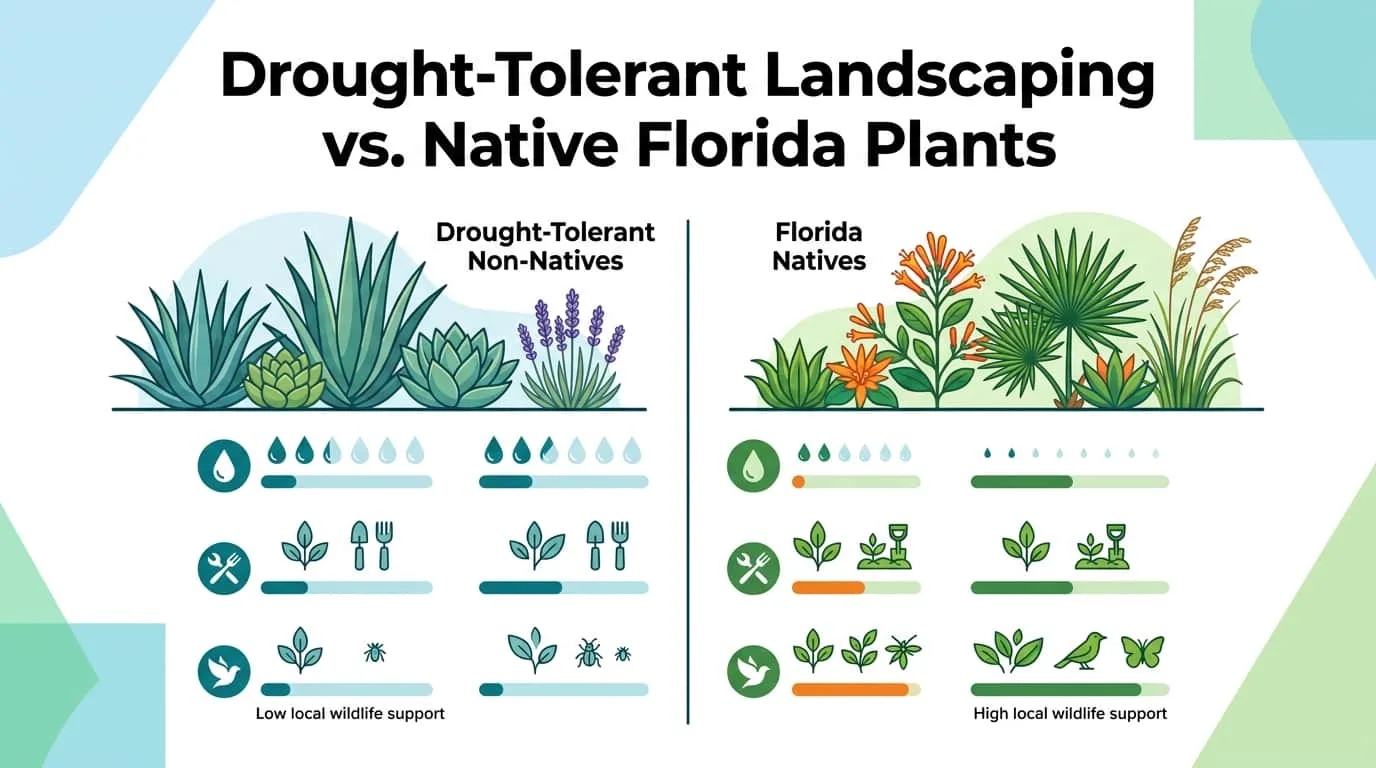
Drought-tolerant plants can survive with minimal water, but they aren't necessarily from Florida. Native plants are both drought-adapted and naturally suited to Florida's sandy soil, local rainfall patterns, and ecosystem. Many Florida natives are drought-tolerant by default — but not every drought-tolerant plant is native. Knowing this difference matters because it determines how your yard performs, what it costs to maintain, and how much it supports the local environment.
Drought-tolerant non-native options like lantana or ornamental grasses can work well in Florida yards. They just don't carry the ecological advantages that true natives provide.
Why Native Plants Are a Smart Choice for Sanford Yards
Native Florida plants evolved over thousands of years in this exact climate. They don't need fertilizer to get established, rarely need pesticides, and once they're rooted, they largely take care of themselves.
Here's why that matters for Sanford homeowners specifically:
- Pollinators depend on them. Native bees, butterflies, and birds rely on plants like Firebush and Muhly Grass for food and shelter. Non-native species often can't fill that role.
- They're HOA-friendly. Many HOAs in communities like Heathrow and the Markham Woods corridor have started approving Florida-Friendly Landscaping plans, especially those that reduce irrigation use.
- They lower your water bill. Once established (typically within 6 to 12 months), most Florida native plants need little to no supplemental irrigation. Homeowners who switch from traditional turf to a native plant design often see a 30 to 50 percent reduction in outdoor water use.
- They handle our soil. Sanford's sandy, fast-draining soil is a challenge for many traditional plants. Natives like Saw Palmetto thrive in it.
What Are the Best Drought-Tolerant Plants for the Sanford Area?
The best drought-tolerant plants for Sanford are those that can handle sandy soil, 90-plus degree summers, and months without significant rain. Two of the top performers include Saw Palmetto and Muhly Grass.
Saw Palmetto (Serenoa repens)
This native shrub is nearly indestructible once established. It provides year-round texture, produces berries that wildlife love, and grows well in full sun or partial shade. Expect it to reach 5 to 10 feet wide over several years, making it a solid anchor plant for large beds or along fences. Installation typically costs $25 to $75 per plant depending on size.
Muhly Grass (Muhlenbergia capillaris)
One of the most visually striking natives in Florida. Every fall, it bursts into feathery pink-purple plumes that last for weeks. It grows in tight clumps about 3 feet tall, requires almost no care once established, and handles dry spells without complaint. Muhly Grass runs about $15 to $30 per plant at most Central Florida nurseries.
Other strong performers for landscaping in Sanford, Florida include:
- Coontie Palm — a low-growing native that doubles as a host plant for the rare Atala butterfly
- Gopher Apple — a ground cover that spreads slowly and handles drought and foot traffic
- Beautyberry (Callicarpa americana) — produces clusters of bright purple berries in fall, great for wildlife
How Much Water Can a Native Plant Landscape Actually Save?
Switching to a native or drought-tolerant design can cut your outdoor irrigation by 30 to 60 percent annually. For a typical Sanford home using around 6,000 gallons of water per month on irrigation during summer, that's a potential saving of 1,800 to 3,600 gallons every month. At current Seminole County water rates, that can translate to $20 to $50 in monthly savings during peak season.
Beyond cost, Seminole County's water management guidelines actively encourage Florida-Friendly Landscaping. Some neighborhoods near the St. Johns River Water Management District's jurisdiction have specific watering restrictions, especially during drought watches, which native landscapes handle easily.
If you want to go further, pairing a native plant design with a smart hardscape installation (like a paver patio or decorative gravel border) can reduce your total irrigated turf area by 40 percent or more. Less grass means less water, fewer mowing hours, and lower maintenance costs year-round.
Do Native Landscapes Actually Require Less Maintenance?
Yes, but with one caveat: the first 6 to 12 months require consistent watering while plants establish their root systems. After that, most Florida natives need very little attention.
Here's a realistic maintenance timeline:
- Months 1 to 6: Water 2 to 3 times per week during dry stretches. Mulch beds to hold moisture and suppress weeds.
- Months 6 to 12: Reduce watering to once per week or during extended dry periods only.
- Year 2 and beyond: Most natives need pruning once or twice a year, no fertilizer, and minimal pest management.
Compare that to a traditional St. Augustine lawn, which typically needs watering 2 to 3 times per week year-round, monthly fertilization from March through September, and regular mowing every 7 to 10 days. The labor and product costs add up fast.
Our team at Citrus Landscape Solutions works with Sanford homeowners on sod design and installation when a green lawn is still the goal, while helping others transition portions of their yard to native or low-water designs. We've seen firsthand how the right mix of sod and native plantings can cut maintenance time in half while keeping a yard looking sharp.
How Do You Stay Compliant With HOA Rules When Going Native?
Most HOAs in Sanford and surrounding Seminole County communities allow Florida-Friendly Landscaping under Florida Statute 373.185, which prohibits HOAs from banning Florida-Friendly plants outright. That said, presentation matters.
A few tips for HOA compliance:
- Use defined borders and edging around native plant beds so they look intentional, not neglected.
- Choose upright, structured natives like Muhly Grass or Firebush rather than sprawling ground covers near your front-facing areas.
- Submit a landscaping plan to your HOA before planting. Most approve requests within 2 to 4 weeks.
- Include a brief description explaining the Florida-Friendly Landscaping designation to help your HOA board approve it with confidence.
Communities around the Markham Woods area and established neighborhoods near Central Park in Sanford have seen growing acceptance of these designs over the past few years, especially as water bills climb.
Build a Florida Yard That Works With the Climate, Not Against It
Sandy soil, summer downpours, months-long dry spells, and HOA scrutiny: your Sanford yard faces all of it. Native and drought-tolerant landscaping isn't a compromise; it's a smarter way to have a yard that looks good and costs less to keep up.
The shift doesn't have to happen all at once. Start with one or two beds, replace some turf with native ground covers, or add a border of Muhly Grass along your driveway. Small changes add up quickly, both in water savings and visual impact.
Ready to make a plan? Contact Citrus Landscape Solutions at (407) 759-1260. Our team knows Sanford's soil, climate, and HOA requirements, and we'll help you build a yard that's low-maintenance, beautiful, and built to last through Florida's toughest seasons.