Tampa homeowners are turning their yards into citrus havens, and it's easy to see why. The "lemonading" trend, which centers on growing lemon and citrus trees as the focal point of a residential garden, has taken off across the Bay Area in a big way. If you're curious whether your Tampa yard could support a thriving citrus setup, the short answer is yes.
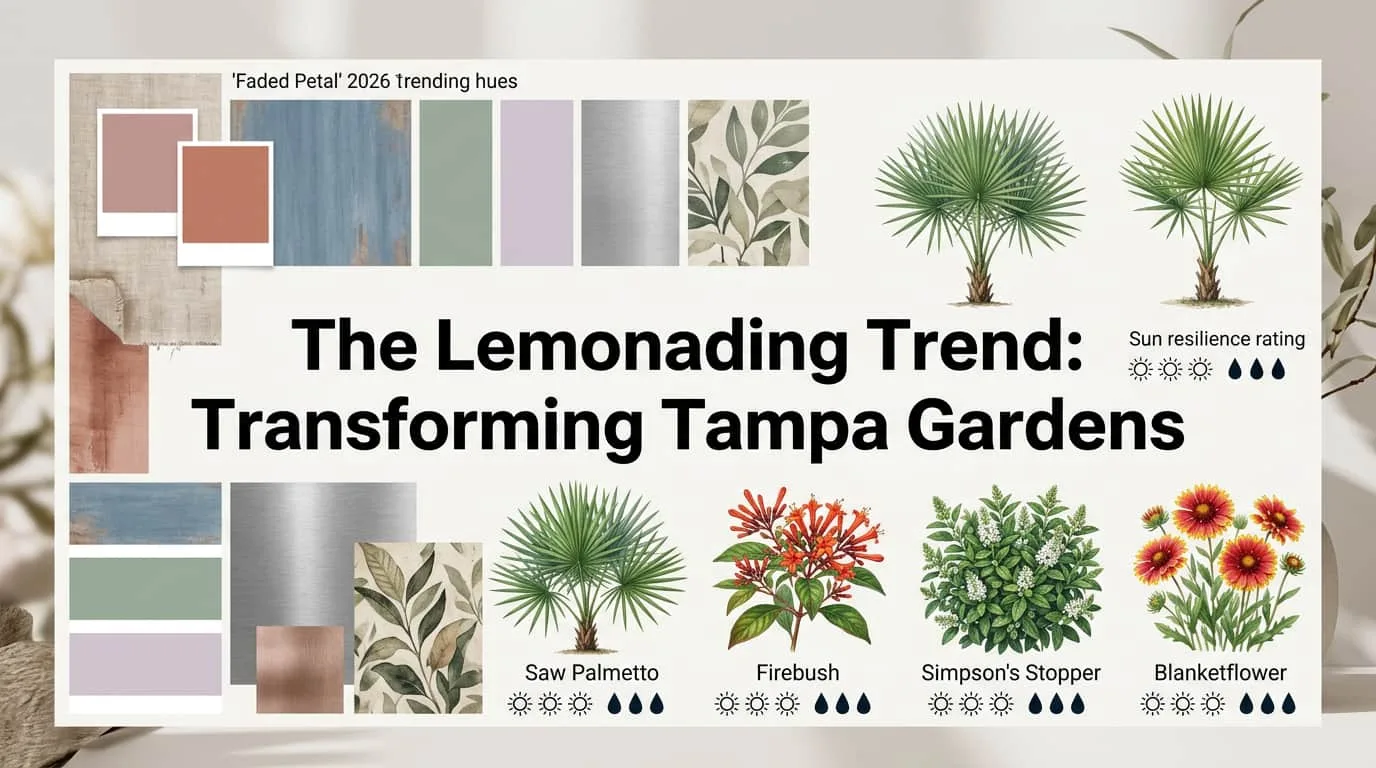
The concept isn't just about planting a lemon tree and hoping for the best. Lemonading is a full landscaping philosophy. It uses citrus trees as anchor plants, then builds a cohesive color palette, often drawn from soft Faded Petal tones like blush, sage, and warm cream, around them. Native plants fill in the gaps. Hardscaping ties it all together. When done right, it creates a yard that looks intentional, thrives in Florida's climate, and adds real value to your home.
Ready to get started? Call Citrus Landscape Solutions at (407) 759-1260 for a free consultation.
Why Does Tampa's Climate Make Citrus Gardening So Easy?
Tampa sits in USDA Hardiness Zone 9b to 10a, which means mild winters and long, warm growing seasons. Citrus trees need at least 6 hours of direct sun per day and temperatures that rarely dip below 25°F. Tampa delivers both without much effort on your part.
The city averages around 246 sunny days per year and summer humidity that actually helps young citrus trees establish root systems quickly. Compare that to Central Florida's cooler inland pockets where a surprise cold snap can damage fruit. In neighborhoods like Palma Ceia or Seminole Heights, where properties tend to have open yards with good southern exposure, citrus trees can produce fruit within 3 to 5 years of planting.
One thing to watch: Tampa's heavy summer rainfall (averaging 45 to 55 inches annually) means drainage matters a lot. Poor drainage is the number one reason citrus trees fail in this area. Get the soil right first, and you've cleared the biggest hurdle.
How Do You Prepare Soil and Choose the Right Citrus Variety?
Start with a soil test. Tampa's native soil is often sandy and nutrient-poor, with a pH that can swing between 5.5 and 7.5. Citrus trees prefer a pH between 6.0 and 6.5. Most hardware stores sell basic soil test kits for $10 to $20, or you can send a sample to the University of Florida IFAS Extension lab for a more detailed reading.
Once you know your pH, amend the soil. Mix in compost (roughly 2 to 3 cubic feet per planting hole) to improve water retention and add organic matter. If your pH is too low, add dolomite lime. If it's too high, elemental sulfur will bring it down.
For variety selection, here's what works well in Tampa specifically:
- Meyer Lemon: A top pick for backyard gardens. It's compact (6 to 10 feet), produces sweet fruit, and handles Tampa's heat better than true lemons.
- Valencia Orange: A strong producer that does well in the humidity. Expect fruit from November through June.
- Hamlin Orange: An early-season variety, great for neighborhoods like Westchase where HOA rules may limit tree height, as it stays under 12 feet.
- Clementine Mandarin: Fast to fruit (sometimes within 2 years), easy to peel, and popular with kids.
When pairing citrus with native plants for a true lemonading look, consider Firebush, Muhly Grass, and Saw Palmetto. These plants thrive in Tampa's conditions without heavy watering, and their warm tones complement Faded Petal color schemes well. Our sod design and installation team often pairs citrus gardens with Florida-friendly turf selections to complete the look without adding maintenance burden.
What Are the Best Maintenance Practices for Tampa Citrus Gardens?
Humidity, pests, and irrigation are the three things that trip up most Tampa citrus growers. Handle each one deliberately and your trees will thrive for 20 to 30 years.
Humidity and Fungal Issues
Tampa's summer months bring humidity levels of 70 to 90%, which creates ideal conditions for fungal problems like greasy spot and melanose. Both affect leaves and fruit quality. Apply copper-based fungicide sprays in June and again in August to stay ahead of these issues. Avoid overhead irrigation as it keeps foliage wet for extended periods.
Seasonal Pest Management
Asian citrus psyllid is the pest Tampa growers need to know about. It's present throughout Hillsborough County and can spread citrus greening disease, which has no cure. Inspect leaves monthly for small, waxy, tube-like deposits on new growth. If you spot them, treat with horticultural oil or contact your local UF IFAS Extension office for guidance. Citrus leafminer is another common issue, especially in late summer. It affects young trees most. Spinosad-based sprays work well and are safe around pollinators.
Irrigation
Established citrus trees (3+ years old) in Tampa typically need about 1 inch of water per week during dry periods. Drip irrigation is the most efficient method. It delivers water directly to the root zone, reduces fungal pressure, and cuts water use by 30 to 50% compared to overhead sprinklers. A basic drip system for a small citrus garden of 3 to 5 trees runs $150 to $400 installed.
Fertilizing
Use a citrus-specific fertilizer with a ratio like 8-8-8 or 6-3-6 with added micronutrients. Apply three times per year: February, June, and October. Young trees (under 3 years) need smaller, more frequent applications to avoid root burn.
Does a Citrus Garden Actually Boost Your Home's Property Value?
Yes, and the numbers back it up. According to data from the American Nursery and Landscape Association, well-maintained landscaping can add 5 to 15% to a home's resale value. In a Tampa market where median home prices sit around $400,000, that's a potential increase of $20,000 to $60,000.
Citrus gardens do something beyond standard landscaping, though. They signal to buyers that the property is actively cared for and that the yard is functional, not just decorative. Homes in neighborhoods like South Tampa and Carrollwood with mature citrus trees and clean hardscaping consistently receive stronger first impressions during showings.
Pairing your citrus garden with complementary hardscaping features like pavers, edging stones, and defined walkways amplifies the curb appeal further. A clean paver border around a citrus bed costs between $8 and $15 per square foot installed and makes the whole garden look polished and intentional.
For yards where parts of the lawn struggle with shade or heavy foot traffic, some Tampa homeowners are also pairing their citrus gardens with artificial turf in Melbourne Florida and surrounding areas, especially for side yards and back areas that don't get enough sun for natural grass. It keeps maintenance low while the citrus beds remain the visual centerpiece. Artificial turf in Melbourne, Florida installs typically run $8 to $20 per square foot, depending on the grade of turf and the complexity of the area.
How Does Lemonading Benefit the Tampa Community?
A well-planted citrus garden does more than look nice. It contributes to the neighborhood. Citrus trees provide food for pollinators, reduce ambient temperatures through shade and transpiration, and when planted in groups, can reduce stormwater runoff, which is a real concern in low-lying Tampa neighborhoods near Hillsborough Bay.
Community gardens built around the lemonading concept are starting to appear in Tampa's Seminole Heights and Ybor City corridors, where residents pool resources to plant citrus trees along shared green spaces. Some HOAs in New Tampa have even started offering incentives for homeowners who replace struggling turf sections with native plant and citrus combinations.
When neighbors plant citrus trees, the entire street benefits. Tree canopy grows. Pollinators move through. Kids learn where food comes from. That's the kind of neighborhood investment that compounds over time.
Ready to Start Your Tampa Citrus Garden?
Lemonading works in Tampa. The climate supports it, the soil can be prepared for it, and the returns, both in enjoyment and property value, are real. Whether you're starting from scratch or want to integrate citrus into an existing garden, getting the soil prep, variety selection, and irrigation right from day one saves significant time and money over the years.
The team at Citrus Landscape Solutions knows Tampa's soil, weather patterns, and what it takes to build a garden that looks great and produces year after year. Call us at (407) 759-1260 to schedule your free consultation and find out exactly what your yard can support.