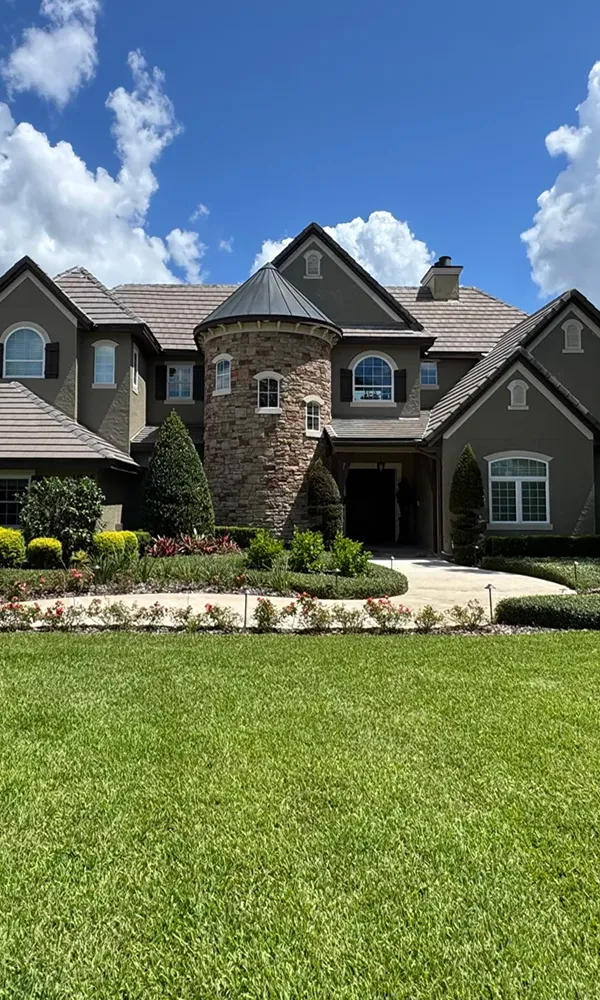
A well-lit yard doesn't happen by accident. The Orlando homes that turn heads after dark, from the oak-canopied streets of Winter Park to the newer builds in Lake Nona, share one thing in common: their lighting was planned in layers. Ready to see what that could look like for your yard? Contact Citrus Landscape Solutions at (407) 759-1260 for a free consultation.
Layered landscape lighting is the same architectural principle used inside your home, applied outdoors. Instead of one overhead light flooding a space, you combine three distinct types of lighting to create depth, drama, and function. Done right, it can increase your home's perceived curb appeal by up to 20% and add measurable resale value, all while making your outdoor space genuinely usable after 7 p.m.
This post walks through every layer of an effective outdoor lighting plan, the right fixtures for Florida's coastal humidity, and pro tips for lighting the native trees that define Central Florida's character.
Does Landscape Lighting Really Improve Curb Appeal and Security?
Yes, and the impact is bigger than most homeowners expect. A properly lit yard signals to neighbors, visitors, and potential buyers that a home is cared for and intentional. Studies from the American Society of Landscape Architects show that quality outdoor lighting can boost property values by 10–15%. Security is a direct benefit, too. Motion-activated path lighting and perimeter uplighting eliminate the dark corners that make a property feel exposed.
Most landscape design Orlando Florida projects we see underperform at night because the homeowner installed a few path lights and called it done. That's one layer. You need three.
The Three Layers of Landscape Lighting: Task, Accent, and Ambient
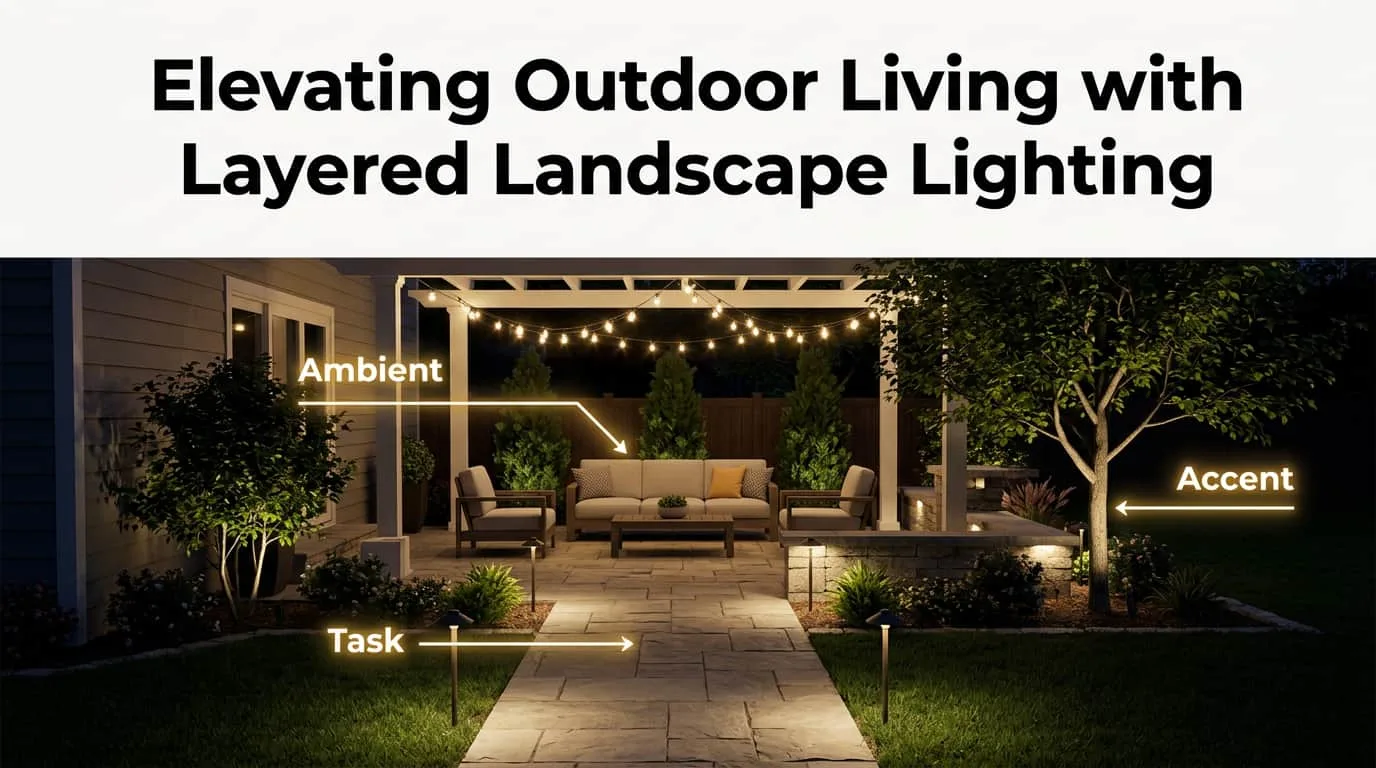
Layered lighting uses three types working together, each serving a different purpose.
Task lighting is the most functional layer. It lights the surfaces people actually use: driveways, walkways, steps, and entry doors. Path lights, step lights, and post lanterns fall into this category. Expect to pay $15–$60 per fixture for quality low-voltage LED options, and plan for 6–8 feet of spacing along walkways to avoid harsh, uneven light.
Accent lighting is what creates drama. Uplights, spotlights, and well lights direct focused beams at specific features like trees, architectural details, or custom hardscapes. This is the layer that makes a yard look professionally designed. A single well-placed uplight on a mature live oak can define the entire look of a front yard after dark.
Ambient lighting fills in the gaps. String lights over a patio, lanterns on a pergola, or a softly lit water feature all create that warm, livable glow that makes you want to stay outside. This layer is often the last added and the most personal.
Getting all three layers working together typically takes 2–3 weeks from design to installation for a mid-sized residential property, depending on scope and any trenching needed for underground wiring.
What Fixtures Hold Up in Florida's Heat and Humidity?
Florida's climate is hard on outdoor materials. Orlando averages 90°F+ summers with humidity regularly hitting 80%, and coastal areas add salt air to the equation. Fixtures that look fine in a showroom can corrode or fade within a single season if they're not built for these conditions.
Look for fixtures rated IP65 or higher for water resistance. Marine-grade brass and powder-coated aluminum are the two best material choices for Central Florida. Brass develops a natural patina that actually improves over time in humid environments. Powder-coated aluminum resists oxidation and works well in both inland Orlando yards and coastal properties closer to the coast.
Avoid zinc alloy fixtures regardless of how they're finished. We've seen them deteriorate within 12–18 months in the Orlando area. LED bulbs are non-negotiable here. They handle temperature swings better than halogen, use 75% less energy, and most quality LEDs carry a 25,000–50,000-hour lifespan.
Pair your fixtures with a low-voltage transformer (12V systems are standard for residential) that includes a built-in timer and surge protector. Lightning is a real concern in Orlando, which sees more strikes per square mile than nearly anywhere else in the country. A quality transformer with surge protection costs $80–$200 and protects your entire system.
How Do You Light Native Cabbage Palms and Live Oaks?
These two trees are the signature plants of Central Florida landscapes, and they respond very differently to lighting.
Cabbage palms (Sabal palmetto) look best with a narrow-beam uplight positioned 3–5 feet from the base, angled at roughly 45 degrees. A 10–15 degree beam spread keeps the focus on the trunk's texture and the frond crown above. Use a warm white color temperature, 2700K–3000K, to complement the natural tones of the bark. One well-placed 6W LED uplight per palm is typically enough.
Live oaks are a different challenge entirely. Their wide, horizontal canopies need multiple uplights to look balanced, usually 3–5 fixtures spread under the drip line, depending on the tree's size. Moonlighting is especially effective here: mount a downward-facing fixture 15–20 feet up in the canopy to cast soft, dappled light on the ground below, mimicking natural moonlight. This technique works beautifully in neighborhoods like Dr. Phillips and Winter Park, where mature live oaks are a defining feature of the landscape.
Our team always checks root zones before we trench for wiring near established trees. Cutting a major root can stress or destabilize a large oak. It's worth routing conduit an extra 10–15 feet to avoid damage to a 50-year-old tree.
If you're pairing your lighting with a broader plant design project, this is the ideal time to plan lighting placement before new plantings go in. It's far easier to run conduit through a bare bed than around established shrubs.
Can Smart Lighting Systems Save Money on an Orlando Home?
Smart landscape lighting systems can cut energy use by 30–40% compared to standard timer-based setups, primarily by adjusting run times based on actual sunset and sunrise times rather than fixed schedules.
A basic smart transformer with app control runs $150–$350. Upgrading to a full smart system with zone control, dimming, and astronomical clock features costs $400–$800 for the controller alone, not including fixtures. For most Orlando homeowners, the mid-tier option hits the right balance between functionality and cost.
Zone control is one of the most practical features available. You can run your accent lighting on one schedule, your path lighting on another, and your security lighting on a motion-triggered circuit, all from a single app. If you're away from home or managing a short-term rental in the Windermere area, remote access adds real peace of mind.
Pair a smart lighting system with artificial turf in high-traffic areas like side yards or pool decks, and you'll have an outdoor space that looks sharp and requires almost no weekly maintenance. No watering schedule, no mowing, just consistent good looks day and night.
Ready to Light Up Your Orlando Backyard?
Layered landscape lighting, done correctly, changes how you use your outdoor space. It's not just about aesthetics. It's about safety, security, and getting real value out of every square foot of your yard once the sun goes down.
Landscape design in Orlando, Florida, presents specific challenges: the heat, the humidity, the afternoon storms, and the native plants that deserve to be shown off properly. Getting the layers right from the start saves money on replacements and retrofits down the road.
Citrus Landscape Solutions has completed 500+ projects across Central Florida and knows exactly what works in this climate. Call us at (407) 759-1260 to schedule your free consultation and get a custom lighting plan built for your yard.