
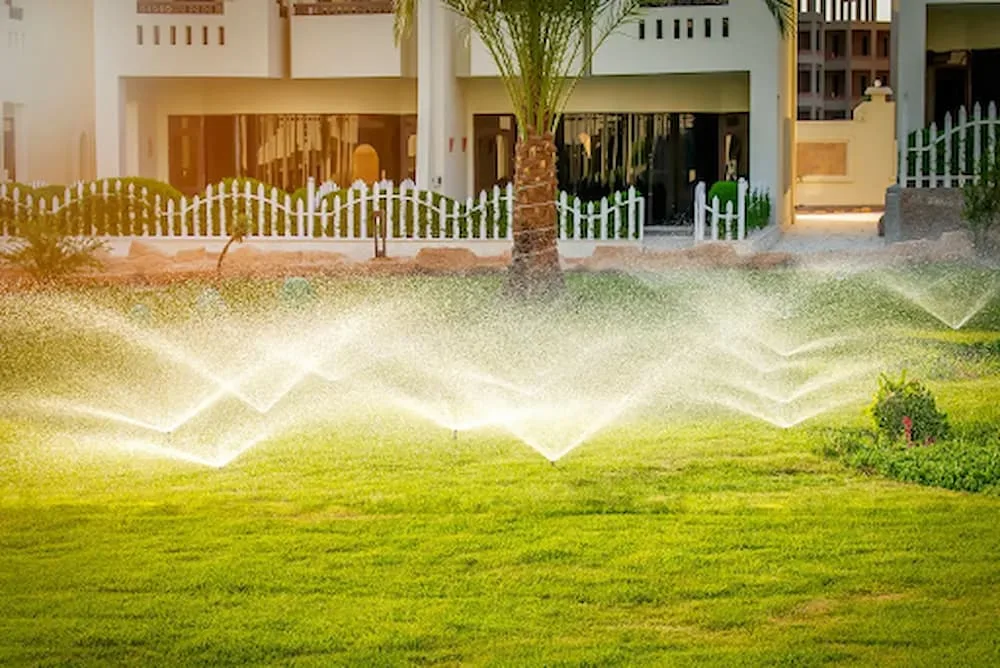
Most Sanford lawns need a deep soak about twice a week, not a light sprinkle every morning. Aim for something close to an inch and a half of water across the whole week, split into two soakings, and try to finish before the sun climbs over Lake Monroe. That short answer is close to what our owners told Real Simple when the magazine asked how to water a lawn the right way. At Citrus Landscape Solutions, we have watered enough Central Florida grass to know that most lawn trouble here starts with water. If yours already looks patchy or gray, reach out to our team at (407) 759-1260 before it spreads.
Do you know what grass you are growing?
You cannot water a lawn well if you do not know what is growing in it. In Sanford, most yards are either St. Augustine or Bahia, and the two do not drink the same way. St. Augustine is thirsty. The wide blade varieties shading older homes near the Historic District downtown can want an inch and a half a week in the heat of summer. Bahia is the stubborn one. It roots deep and gets by on roughly half an inch, which is why you see it holding up on sunny lots with no sprinklers at all. Same street, same weather, two different watering plans. If the lawn came with the house, you may have no idea which one you own, and we can usually tell in about a minute on site.
When is the best time to water in Central Florida?
Early. Before sunrise if you can manage it. Watering in the middle of a Central Florida afternoon loses a big share to evaporation before it ever reaches the roots, and watering after dark leaves the blades wet for hours, which is how fungus like gray leaf spot takes hold. Seminole County also limits watering days, and during Daylight Saving Time that generally means two days a week, with your street address deciding which days you get. We set up client irrigation controllers to follow those rules on their own, so nobody earns a fine and the grass still gets what it needs. Be done by the time your coffee is ready.
Why does watering every day actually hurt your lawn?
This is the mistake we run into most. Daily watering feels responsible, and it does the opposite of what people expect. When water arrives every single morning, the roots never have to chase it, so they stay shallow near the surface. Then one hot week shows up, a day gets skipped, and the whole lawn stresses at once. A deep soak twice a week trains roots to grow down toward moisture that lasts, so the grass can coast through a dry stretch. The lawn tells you when the balance is off. Fungus spots and mushy patches usually mean too much water. Blades folding in half, or gray footprints that stay pressed in after you walk across, mean too little.
Can you count on Florida rain instead?
Not as a plan. A long, steady storm might cover you for a day. A ten minute sun shower that dries off the driveway before it soaks in will not. Rain here is heavy and unpredictable in the same season, so leaning on it leaves gaps your grass ends up paying for. A rain sensor handles the overlap, pausing the system after real rain and switching it back on once the yard dries out.
What tools make watering easier?
A few pieces of equipment take most of the guesswork out of it:
- A properly zoned in-ground irrigation system that is set for your grass type and adjusted as the seasons change
- A rain sensor wired into that system so it skips a cycle after a storm
- Catch cups placed around the yard to measure how much water each zone is really putting down
Get those dialed in and watering stops being something you think about. It also protects what is underneath, whether that is a lawn you have babied for years or fresh sod we just installed. New sod is its own case. For the first few weeks it needs frequent, lighter watering while the roots knit into the soil, and that schedule looks nothing like an established yard's.
Not sure how much water your lawn is actually getting, or why it still looks tired in July? Call Citrus Landscape Solutions at (407) 759-1260 or request a free quote, and we will start with your grass, your soil, and the way your yard drains.