If your yard in Sanford turns into a swamp every time a summer storm rolls through, you're not alone. Florida's tropical rainfall can drop 2 to 4 inches in a single afternoon, and without the right drainage setup, that water has nowhere to go. Need help right away? Call Citrus Landscape Solutions at (407) 759-1260 for a free consultation.
Poorly draining yards don't just look bad. They can damage your home's foundation, drown your grass, and invite mosquitoes to set up camp. The good news is that most drainage problems in Central Florida yards are fixable, and many of the solutions actually improve how your yard looks.
How Do You Know If Your Yard Has a Drainage Problem?
You've got a drainage issue if water pools for more than 24 hours after a storm, if you see soft or muddy patches near your home's foundation, or if your lawn looks consistently patchy and yellow in certain spots. These are all signs that water isn't moving away from your property the way it should.
Walk your yard after the next heavy rain. Look for low spots where water collects, check the slope near your foundation, and pay attention to areas where grass struggles to grow. Near neighborhoods like Celery Estates or along the Seminole County waterways, we often see yards where the natural water table sits high, making surface drainage even more critical. Catching these issues before the next storm season can save you thousands in foundation repairs down the road.
French Drains vs. Dry Creek Beds: Which One Is Right for You?
Both French drains and dry creek beds move excess water away from your yard, but they work differently and suit different situations.
A French drain is a buried trench filled with gravel and a perforated pipe. It captures water underground and redirects it to a lower point or a municipal drain. French drains typically cost between $1,500 and $6,000 depending on the length and complexity of the system. They're ideal when you need to pull water away from a foundation or a flat yard where surface drainage isn't possible.
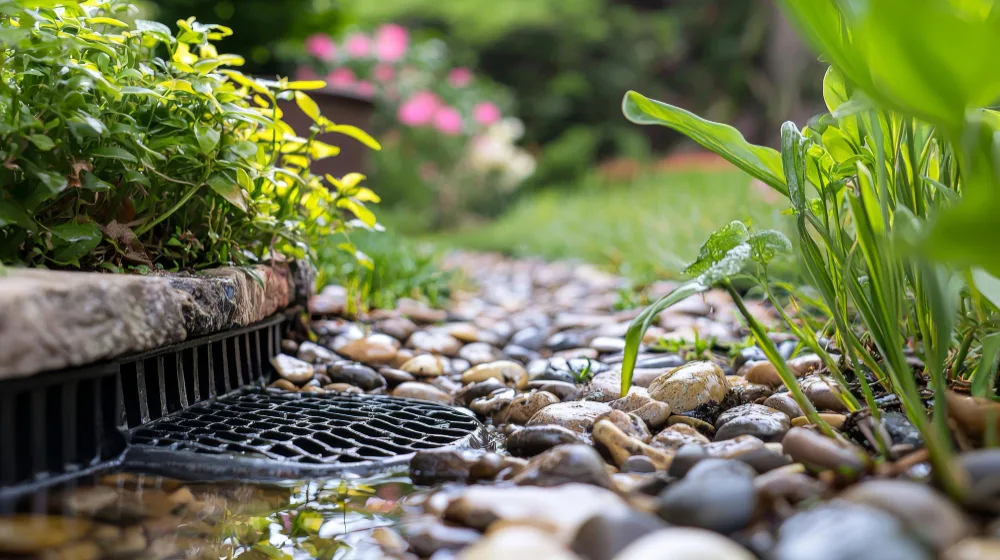
A dry creek bed works above ground. It's a landscaped channel lined with river rock and native plants that guides water across your yard during heavy rain and looks like a natural feature the rest of the time. Dry creek beds generally run $800 to $3,000 and work especially well in yards with a visible slope. Many homeowners in the Historic Goldsboro neighborhood pair dry creek beds with native plantings to create a natural look that fits the character of the area.
Both options can work together. A French drain handles the heavy lifting underground while a dry creek bed manages surface overflow during the worst storms.
Can Native Plants Actually Help with Drainage?
Yes, and they're one of the most underrated tools for managing water in a Florida yard. Native plants like Muhly grass, Swamp Hibiscus, and Florida native ferns have deep root systems that absorb water fast and hold soil in place during heavy rain.
A rain garden is one of the best ways to put these plants to work. You dig a shallow depression in a low-lying area of your yard, fill it with well-draining soil and native plants, and let it capture runoff from your roof or driveway. A properly designed rain garden can absorb 30% more water than a standard lawn. It also reduces the load on your drainage system and cuts down on standing water where mosquitoes breed.
When paired with professional sod design and installation, a rain garden creates a yard that handles Florida's rainfall while staying green and healthy year-round. St. Augustine and Zoysia grasses, both common in Sanford, also tolerate brief flooding better than most turf varieties, making sod selection an important part of your drainage plan.
Does Yard Slope (Grading) Really Make That Big a Difference?
Grading is the single biggest factor in whether water moves away from your home or toward it. The standard recommendation is a 2% slope away from your foundation for at least the first 10 feet. That means the ground should drop about 2 inches for every 10 feet of distance.
We've worked on properties throughout the Sanford area where the grade had settled over time or was never set correctly during construction. In those cases, water was actively pooling against the foundation, which can lead to cracks, mold, and costly structural repairs over time.
Professional regrading costs between $500 and $3,000 for most residential yards, depending on how much soil needs to be moved. After grading, it takes about 2 to 4 weeks for the soil to settle before sod or plants go in. Skipping this step and jumping straight to surface drainage solutions is like fixing a leaky roof with a bucket: you're managing the symptom, not solving the problem.
Keeping Your Drainage System Clear Year-Round
Even the best drainage system fails if it's clogged with leaves, roots, or debris. Florida's fast-growing vegetation means you need to check your drains and creek beds at least twice a year: once in May before hurricane season kicks in, and again in November after the fall leaf drop.
A few things to keep on top of:
- Clear inlet grates on French drains every few months. A blocked grate can cause surface flooding even when the pipe below is clear.
- Flush perforated pipes with a garden hose annually to clear sediment buildup.
- Trim plants growing near dry creek beds to prevent roots from redirecting water flow.
- Check mulch levels around rain gardens, since mulch can compact and reduce absorption over time.
Well-maintained drainage systems last 15 to 25 years. Neglected ones can fail in as few as 5 years. Adding landscape lighting along dry creek beds and drainage paths also helps you spot blockages or overflow at night during storm events.
Ready to Fix Your Yard's Drainage? Here's Where to Start
A dry, healthy yard starts with knowing where your water goes. For landscaping in Sanford, Florida, that means accounting for high summer rainfall, low-lying terrain, and the sandy-clay soil mix common throughout Seminole County that can slow absorption significantly.
Our team at Citrus Landscape Solutions has completed 500+ projects across Central Florida, and we know how local soil conditions, rainfall patterns, and neighborhood layouts affect drainage. Whether you need a full regrading project, a French drain installation, or a native plant rain garden, we'll build a solution that keeps your yard dry and looking great. Call us today at (407) 759-1260 for a free quote.