A fence that works well for a Sanford property does more than mark a boundary. It adds usable privacy to the backyard, keeps pets contained, complements the home's exterior, and holds up through years of Florida weather without demanding constant maintenance. Citrus Landscape Solutions helps Sanford homeowners sort through the material and design choices before the first post goes in. Call (407) 759-1260 or request a site walkthrough and quote online to get started.
Sanford homeowners weighing a fence decision typically arrive at the same set of competing considerations: the look they want, the privacy they need, the pets or kids they need to contain, the HOA rules they have to work within, and what the fence will do to the property's resale value. Sorting through those variables is easier with a clear picture of how the main material options perform in Central Florida's climate and what the local approval process typically involves. Here is how to think through the choice before you commit to any particular direction.
How Do Aluminum, Vinyl, and Wood Perform in Florida's Climate?
Florida's combination of heat, humidity, UV exposure, and seasonal heavy rain puts fence materials through a stress cycle that does not apply in cooler, drier climates, and the differences in how each material handles that cycle become more apparent with each passing year. Choosing the right material for a Sanford property means accounting for those conditions rather than defaulting to what looked good in a neighbor's yard in a different state.
Aluminum is the most weather-resistant of the three for Florida's conditions. It does not rust, does not absorb moisture, and resists UV degradation reliably when the coating is properly applied. It handles the wet season and the hurricane winds with minimal structural concern, and its maintenance requirement over the life of the fence is close to zero. The limitation of aluminum is that it does not offer privacy in the way a solid panel fence does. Its open picket design suits front yards, pool enclosures, and decorative boundaries well, but it is not the material for a homeowner whose primary goal is a solid visual barrier at the back of the property.
Vinyl offers both weather resistance and privacy in a single material. A closed-panel vinyl privacy fence holds up to Florida's climate significantly better than wood over the long term, does not require painting or staining, and resists the moisture-related degradation that wood experiences in Seminole County's humidity. Quality matters more with vinyl than with the other options because lower-grade vinyl yellows and becomes brittle under prolonged UV exposure. Specifying a product with UV inhibitors built into the material addresses that directly and extends the fence's appearance and structural integrity for decades. The upfront cost is higher than wood, but the maintenance savings over a ten to fifteen year period typically close that gap.
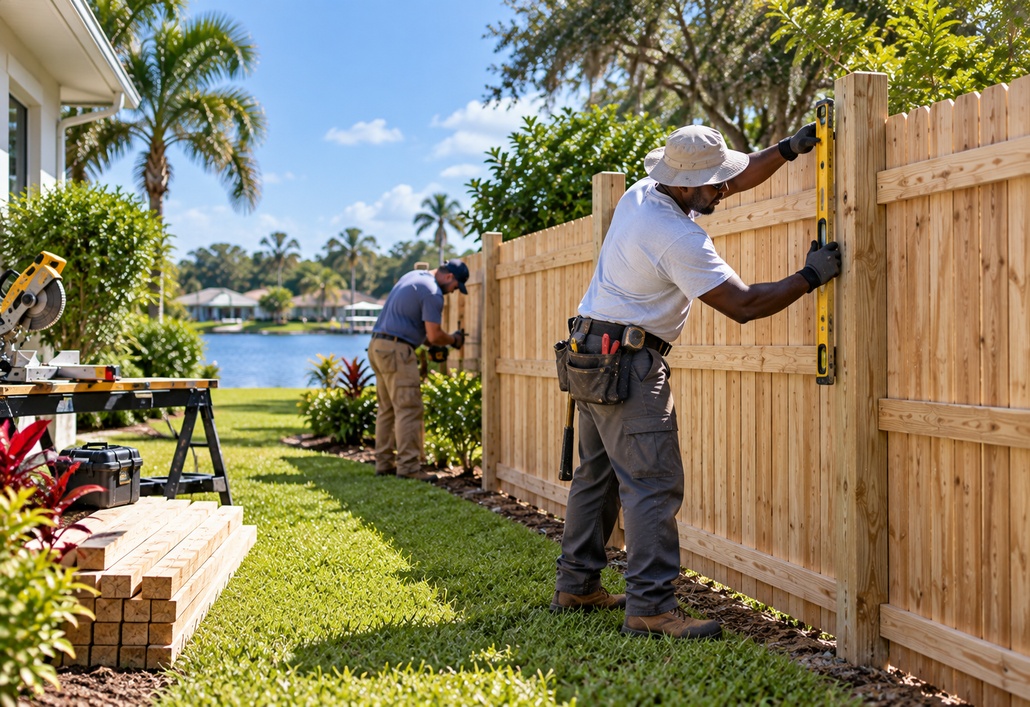
Wood remains the most affordable entry point for a privacy fence and the material that best matches certain home styles aesthetically. Pressure-treated pine or cedar holds up better than untreated wood in Florida's moisture-heavy environment, but it still requires periodic cleaning, staining or sealing, and inspection for rot at the base of posts where contact with the soil accelerates deterioration. A well-maintained wood fence can serve a Sanford property for fifteen years or more. One that receives no maintenance may develop significant problems in eight to ten. For homeowners who are comfortable with that routine or who have a specific aesthetic reason to choose wood, it remains a viable option. For those who want to minimize long-term involvement with the fence, vinyl or aluminum is the better direction.
What HOA Rules and Setback Requirements Apply in Sanford?
One of our Sanford customers was working within an HOA that had specific requirements around fence height, material, style, and color. The rules were detailed enough that the range of compliant options was narrower than the homeowner had initially assumed. We worked through the governing documents with them, identified what was actually permitted within those constraints, and helped them find a design that met the HOA's requirements and still gave them a result they were genuinely happy with. That outcome required starting with the HOA documentation rather than with the product catalog, which is the right sequence whenever an HOA is involved.
HOA approval in Sanford communities typically requires submitting a written application with specifications that include the proposed material, height, color, and a site plan showing the fence location relative to the property lines and structures. Approval timelines vary by association, but most require at least a few weeks for the architectural review committee to consider the application. Starting that process before you have committed to a contractor or a material avoids the situation where you have a crew ready to work and are still waiting for HOA approval to proceed.
City of Sanford setback requirements govern how close to the property line a fence can be placed, and those requirements differ for front yard, side yard, and rear yard fence locations. A fence that is built closer to the property line than the applicable setback allows may need to be moved at the homeowner's expense if the violation is identified during an inspection or a future property transaction. Verifying the setback requirements for the specific fence location before installation begins protects against that scenario. A contractor familiar with Seminole County and Sanford's fence regulations will confirm these details before the design is finalized.
How Does Fencing Connect to Overall Landscape Design?
A fence that is chosen and installed independently of the surrounding landscape tends to look like exactly that: a structure that was added without reference to what is already there. A fence that is selected with the home's exterior, the existing planting beds, and the overall yard composition in mind reads as part of a considered design rather than an afterthought, and that integration has real implications for how the property presents both to guests and to potential buyers.
The connection between fencing and landscape design runs in both directions. The fence line defines the boundaries within which planting beds, lawn areas, and outdoor living spaces are organized, which makes the fence placement decision a landscape design decision as much as a practical one. A fence that runs along the back property line at a distance that creates an unusable narrow strip between the fence and the existing bed layout is a fence that could have been positioned more thoughtfully with a few more minutes of planning before installation.
Screening plants along the fence line, gate placement that aligns with existing pathways, and fence height that balances privacy without visually overwhelming a modest yard are all decisions that benefit from a landscape perspective rather than a purely functional one. For Sanford homeowners who are also considering planting changes, hardscape additions, or an overall yard redesign, coordinating the fence installation with that broader plan produces a more coherent result than tackling each element independently.
What Does the Installation Timeline and Ongoing Maintenance Look Like?
A residential fence installation in Sanford typically runs one to two days for a standard backyard enclosure once permits are pulled and materials are on site. The permit process, which includes a site plan review and typically a final inspection after installation, adds time to the overall project timeline and should be factored into the planning calendar. A project that needs to be completed before a specific date, such as the arrival of a new pet or a planned outdoor event, should account for the permitting window when the target date is set.
Material choice determines the ongoing maintenance picture more than any other single decision. Aluminum requires essentially no routine maintenance beyond occasional cleaning. Vinyl requires periodic washing to prevent mildew buildup on the surface, which is common in Florida's humidity, but no painting or structural treatment. Wood requires inspection each year for rot, particularly at the base of posts and along the bottom rail, and periodic staining or sealing to maintain the material's resistance to moisture. The maintenance commitment is real and compounds over the years, so the homeowner who prefers to spend weekends in the yard rather than on the fence should weight that factor in the material decision.
Gate hardware and post stability are the two components most likely to need attention over the life of any fence, regardless of material. Gates cycle open and closed repeatedly, and the hinges, latches, and post that support the gate weight take more mechanical stress than the fence panels. Checking gate hardware annually and addressing any developing looseness before it becomes a structural problem extends the life of the gate significantly. Posts that develop movement, particularly corner posts and gate posts that bear the highest load, should be inspected and re-set before the movement progresses to the point where panels are affected.
If you are ready to talk through material choices and get a site-specific quote for your Sanford property, call Citrus Landscape Solutions at (407) 759-1260 or request a walkthrough online. Our fence installation team handles the design, the permitting, and the installation so the finished result fits your property, your HOA, and your long-term plans for the yard.