Choosing between artificial turf and traditional sod is one of the most common landscaping decisions Florida homeowners face. For residents in St. Petersburg, the answer depends on your budget, lifestyle, and how much time you want to spend maintaining your lawn. This guide breaks down everything you need to know—costs, maintenance, durability, and environmental impact—so you can make a confident choice for your yard.
Not sure where to start? Citrus Landscape Solutions offers free consultations to help St. Pete homeowners find the right fit. Call us at (407) 759-1260.
Real Grass vs. Synthetic Turf: What Are the Real Differences?
Both options can deliver a beautiful, green yard—but they get there in very different ways. Traditional sod is living grass, typically St. Augustine or Zoysia in Florida, that's grown in sheets and installed directly into your soil. It feels natural underfoot, supports local ecosystems, and gives your yard that authentic outdoor feel.
Artificial turf, on the other hand, is a synthetic surface engineered to look and feel like real grass. Modern turf products are UV-resistant, drain efficiently, and stay green year-round without a single mow or irrigation cycle. In neighborhoods like Kenwood and Old Northeast, where HOA standards are high and curb appeal matters, both options have their place—but each comes with trade-offs worth understanding.
Pros of traditional sod:
- Natural, soft feel underfoot
- Supports biodiversity and local pollinators
- Cooler surface temperature in summer
- Generally lower upfront installation cost
Cons of traditional sod:
- Requires consistent watering, mowing, and fertilizing
- Vulnerable to pests, fungus, and drought stress
- Can develop bare patches after heavy storms or foot traffic
Pros of artificial turf:
- Zero mowing, fertilizing, or regular watering required
- Stays lush and even through Florida's dry and wet seasons
- Pet-friendly, durable, and easy to clean
- Long lifespan of 15–20 years with proper installation
Cons of artificial turf:
- Higher upfront installation cost
- Surface can heat up significantly in direct sun
- Does not support natural soil ecosystems
What Does Lawn Maintenance Actually Look Like in Florida?
Maintaining a natural lawn in Florida demands more effort than in most other states. St. Petersburg's humid subtropical climate—with summer temperatures regularly hitting the low 90s and annual rainfall averaging around 50 inches—creates ideal conditions for weeds, fungal disease, and pest infestations.
A typical sod lawn in the area requires watering two to three times per week during dry months, mowing every 7 to 14 days, and seasonal fertilizing to keep the grass healthy. Factor in professional lawn treatments for chinch bugs or brown patch fungus, and you're looking at ongoing time and money throughout the year.
Artificial turf, by contrast, needs only an occasional rinse to remove debris and a quick brush to keep the fibers standing upright. For families with dogs near Walter Fuller Park or active kids who treat the backyard as a second home, synthetic turf handles heavy foot traffic without developing the worn patches that natural grass struggles to recover from in Florida's intense heat.
How Much Does Each Option Cost in the Long Run?
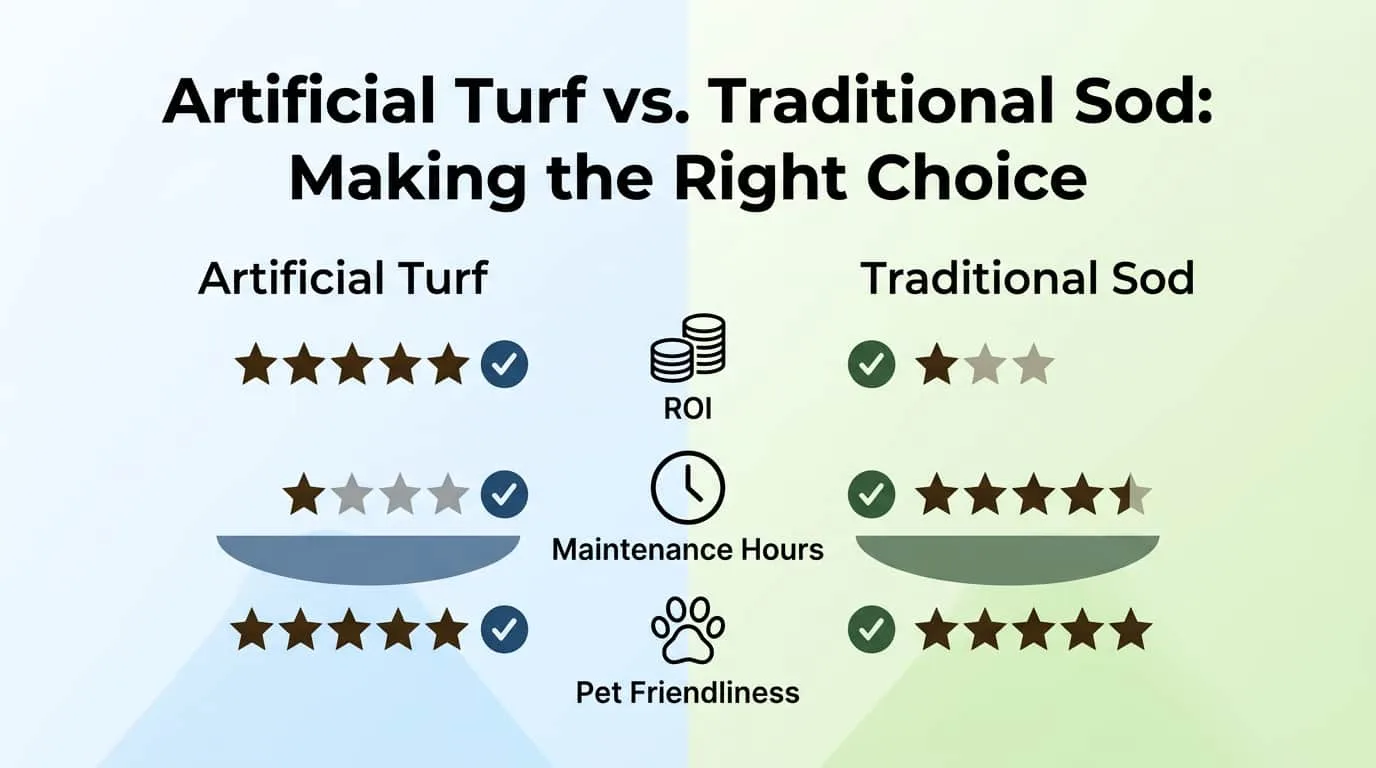
Here's where many homeowners are surprised. Natural sod has a lower upfront cost—typically $0.30 to $0.80 per square foot for the sod itself, plus $1.00 to $2.00 per square foot for professional installation. For a 1,500-square-foot yard, you're looking at an initial investment of roughly $1,950 to $4,200.
Artificial turf carries a higher upfront price: installation generally ranges from $8 to $15 per square foot depending on the turf grade and site preparation required. That same 1,500-square-foot yard could cost $12,000 to $22,500 to install.
So why do so many landscaping St. Petersburg Florida homeowners make the switch? Because the long-term math often favors synthetic turf. A natural lawn in Central Florida can cost $1,200 to $2,400 per year in water, fertilizer, pest control, and professional maintenance. Over a 10-year period, those costs accumulate quickly. Artificial turf eliminates most of those recurring expenses, making it a strong investment for homeowners who plan to stay in their home long-term.
Can Your Lawn Survive Florida's Heat and Tropical Storms?
Florida weather is not gentle. Summers bring sustained heat indexes above 100°F, and hurricane season runs from June through November. Both your lawn choice and your investment need to hold up under real pressure.
Traditional sod is vulnerable to heat stress, particularly during dry spells between summer rain events. St. Augustine grass can go dormant or develop brown patches if irrigation is inconsistent. After a tropical storm, sod can wash out in low-lying areas or develop standing water issues that lead to fungal problems.
Artificial turf is engineered to handle both extremes. High-quality synthetic turf uses UV-stabilized fibers that resist fading even after years of direct Florida sun. Proper sub-base installation includes drainage layers designed to push storm runoff through quickly—an important factor for landscaping St. Petersburg Florida properties that sit in flood-prone zones near the bay or Weedon Island.
One honest drawback: artificial turf does absorb and retain heat. On a 90°F afternoon with full sun exposure, the surface temperature of synthetic turf can reach 150°F or higher. Strategic placement of shade trees or pergolas can offset this significantly, and our plant design team can help you plan native shade plantings that complement your turf installation beautifully.
Is Artificial Turf Actually Better for the Environment?
This is a fair question, and the answer is more nuanced than a simple yes or no. Traditional grass does support local biodiversity—it provides habitat for insects, helps cool the surrounding air through transpiration, and breaks down naturally at end of life. But in a water-stressed region like Tampa Bay, the environmental cost of irrigating a natural lawn is real.
The average Florida lawn uses 50 to 60 gallons of water per square foot per year for irrigation. A 1,500-square-foot lawn can consume 75,000 to 90,000 gallons annually. Switching to artificial turf eliminates virtually all of that irrigation demand—a meaningful contribution to regional water conservation efforts, particularly as South Florida continues to face water supply pressures.
Artificial turf also eliminates the need for chemical fertilizers and pesticides, which can run off into storm drains and contribute to water quality issues in Tampa Bay. For homeowners near the waterfront or in areas draining toward the bay, this is a practical environmental benefit worth weighing.
Which Option Fits Your Lifestyle?
The right choice comes down to how you use your yard and what you value most. Here's a straightforward breakdown:
Choose natural sod if you:
- Prefer the look and feel of living grass
- Have a lower initial budget
- Enjoy garden maintenance as a weekend activity
- Want to support local pollinators and soil health
Choose artificial turf if you:
- Want a low-maintenance yard with no weekly upkeep
- Have pets or young children who use the lawn heavily
- Are focused on long-term cost savings on water and maintenance
- Travel frequently and can't maintain a consistent lawn care schedule
- Need a durable surface that holds up to Florida weather year after year
Many landscaping St. Petersburg Florida homeowners find that a hybrid approach works well—natural sod in shaded or garden areas, and artificial turf in high-traffic zones like side yards, dog runs, or pool surrounds. If you're not sure which layout makes sense for your property, our team can help you think through the design during a free consultation.
Transforming Your St. Pete Curb Appeal Starts Here
A well-chosen lawn does more than look good—it adds real value to your home, reduces your maintenance burden, and creates an outdoor space your family actually enjoys. Whether natural sod or synthetic turf is the better fit for your yard, getting the installation right from the start is what makes the difference between a lawn that thrives and one that causes ongoing headaches.
Citrus Landscape Solutions serves homeowners across St. Petersburg and the greater Central Florida area. Our team understands the local soil, weather patterns, and HOA requirements that affect your landscaping decisions. Call us at (407) 759-1260 to schedule your free consultation and get a detailed quote for your project.